If you’ve ever worked with plumbing, whether as a homeowner tackling a bathroom remodel or a contractor managing a multi-unit residential build, you’ve likely crossed paths with PP-R (Polypropylene Random copolymer) fusion fittings. They’re the quiet workhorses of modern plumbing—lightweight, corrosion-resistant, and designed to last for decades when installed correctly. But one question I get asked more than any other as a PP-R pipes and fittings supplier is, “What’s the actual cost of PP-R fusion fittings?” It’s not a simple number I can rattle off over the phone; the price isn’t just a line item on an invoice. It’s a product of raw material choices, manufacturing processes, quality testing, logistics, and even the small details that separate a fitting that lasts 50 years from one that leaks in three. Let me break this down the way I explain it to every customer who walks through my door or sends an email asking for a quote. PP-R Pipes and Fittings
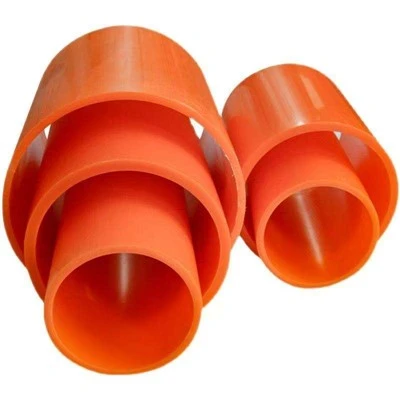
First, let’s start with the basics: PP-R fusion fittings aren’t one-size-fits-all. The cost shifts dramatically based on three core factors: material grade, size, and pressure rating. This is where a lot of people new to the industry get tripped up—they see a cheap fitting online and assume it’s the same as the high-quality one we stock, but it’s not. The best PP-R for plumbing applications is PP-R Grade 1, also known as PPR CT (Cold Tempered). This grade is formulated to withstand consistent hot water pressure, temperature fluctuations, and the occasional water hammer that comes with daily use. It’s also BPA-free, which is non-negotiable for residential drinking water systems. Cheaper fittings often cut corners with lower-grade recycled PP or even mixed plastic resins that mix PP with other polymers to cut costs. These materials are weaker, more prone to brittleness in cold temperatures, and can leach chemicals over time. As a supplier, I source Grade 1 PP-R exclusively because the last thing I want is a customer coming back to me three years later with a burst pipe and a ruined bathroom floor.
Size is another huge driver of cost. A 20mm (¾-inch) elbow for a kitchen sink isn’t the same as a 110mm (4-inch) coupling for a commercial building’s main water line. The amount of PP-R resin in a large fitting is exponentially higher than a small one, so price scales with volume. But it’s not just about the amount of plastic—manufacturing large fittings requires larger molds, more precise machining to ensure the fusion joint is consistent across every unit, and stricter pressure testing. We test every single batch of large-diameter fittings at our in-house lab to make sure they can hold up to the 10-bar pressure rating required for municipal water supplies, a step that small online retailers skip entirely.
Pressure rating is the third key variable. PP-R fusion fittings are rated for PN10, PN16, and PN20—numbers that refer to their maximum working pressure at 20°C. A PN16 fitting, which is suitable for most residential and light commercial applications, is cheaper than a PN20, which is built to handle higher pressure for larger commercial systems or industrial plumbing. The wall thickness of the fitting is thicker for higher pressure ratings, which means more raw material and more time in manufacturing to get the dimensions just right. Cutting corners here is a recipe for disaster: a PN10 fitting used in a high-pressure line will deform over time, leading to leaks and costly repairs.
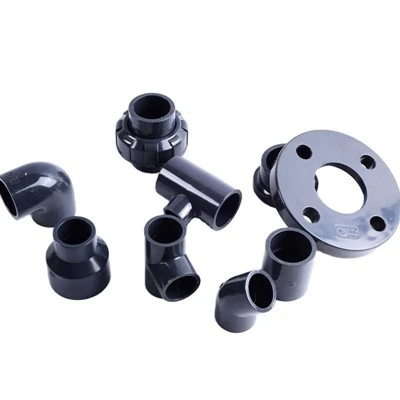
Now that we’ve covered the core factors, let’s talk about the range of costs you can expect. For small, residential-grade fittings, like 20mm elbow or tees, the unit cost typically runs between $0.75 and $2.50 each, depending on the brand and material grade. That might sound low, but when you’re ordering a bulk pack of 100 tees, that adds up to $75 to $250. For medium-sized fittings, like 50mm couplings or reducers, the cost jumps to $5 to $15 each, and large-diameter fittings, like 110mm end caps or flanges, can cost $50 to $200 each. Of course, these are rough numbers—your actual cost will depend on order volume, delivery location, and any custom fittings you might need for a unique project.
But here’s the part that most customers don’t think about: the true cost isn’t just the upfront price of the fitting. It’s the long-term value, and the hidden costs of choosing a cheap, low-quality fitting. I’ve had contractors come to me after buying $100 worth of cheap fittings from a big-box store, only to have half of them fail during installation. They had to spend another $200 replacing the faulty ones, plus pay for an extra day of labor to fix the mess. Another time, a homeowner reached out to me three years after their remodel, saying their bathroom pipe had burst and ruined their new hardwood floors. The fitting they’d used was made from low-grade recycled PP that broke down from hot water exposure. The total repair cost was over $15,000, all because they tried to save $50 on cheap fittings. That’s the hidden cost you never see on the product label.
Now, let’s get into what goes into the price you pay when you order from a reputable supplier like me. First, the raw material: Grade 1 PP-R resin costs between $1.50 and $2.00 per kilogram, depending on market conditions. Recycled PP, by contrast, is often less than $0.50 per kilogram. That’s a huge gap, and it’s the main reason cheap fittings are so much cheaper. But it’s not just about the resin—we spend an extra $0.20 to $0.30 per fitting on rigorous quality testing. Every batch of fittings goes through three checks: first, a visual inspection to make sure there are no bubbles, warps, or uneven walls. Second, a pressure test where we submerge a sample of fittings in water and pressurize them to 1.5 times their rated capacity for 10 minutes, checking for leaks or deformation. Third, a fusion test where we heat a sample fitting to the correct fusion temperature, join it to a PP-R pipe, and test the joint to ensure it’s as strong as the fitting itself.
Manufacturing processes also add to the cost, but they’re non-negotiable for quality. We use automated injection molding machines that are calibrated to within 0.1mm, so every fitting has consistent dimensions that ensure a perfect, leak-proof fusion joint. Many smaller manufacturers use outdated equipment that results in slight variations in fitting size, making it easy to overheat or underheat the joint during installation, leading to failure. We also use food-grade lubricants during the molding process, which means our fittings are safe for drinking water—another detail that cheap manufacturers skip, using lubricants that can leach chemicals into your water supply.
Logistics and customer support are part of the cost too. When you order from us, you’re not just getting a box of fittings—you’re getting access to our technical team, who can walk you through the correct fusion temperature for every size and pressure rating, help you calculate how many fittings you need for your project, and replace any faulty units at no cost, no questions asked. We offer bulk discounts for contractors and large projects, so the more you order, the lower your per-unit cost becomes. We also ship directly to your job site or home, with tracking so you always know when your order will arrive.
Let’s address a common misconception: are there any cases where cheap PP-R fusion fittings make sense? For temporary plumbing applications, like a construction site that will be replaced in a year or two, cheap recycled PP fittings might be acceptable. But for any permanent plumbing system—whether it’s a new home, a commercial office, a restaurant, or a rental property—sticking to Grade 1 PP-R fusion fittings is the only way to avoid future headaches. I’ve seen too many cases where a small upfront savings leads to years of costly repairs, unhappy customers, and lost business for contractors.
Another thing to consider is compliance. Many building codes, especially for drinking water systems, require fittings to be certified by organizations like NSF (National Sanitation Foundation) or WRAS (Water Regulations Advisory Scheme) to ensure they’re safe for potable water. All of our PP-R fusion fittings are NSF and WRAS certified, a step that many low-cost overseas manufacturers don’t take. The certification process costs tens of thousands of dollars a year, but it’s a requirement for us because we care about the safety and reliability of the products we supply. When you choose certified fittings, you avoid the risk of using a product that doesn’t meet local building codes, which can delay your project or even lead to fines if a building inspector finds non-compliant materials.
If you’re a homeowner working on a small project, or a contractor managing a large build, I hope this breakdown gives you a clearer picture of what goes into the cost of PP-R fusion fittings. It’s not just a plastic part—it’s a component that will be part of your plumbing system for decades, so the small difference in upfront cost is rarely worth the risk of failure. If you’re ready to get a customized quote for your project, whether you need a few small fittings or a bulk order for a commercial project, feel free to reach out to our team. We can walk you through all of your options, answer any questions you have about material grades, pressure ratings, or compatibility with your existing plumbing, and help you find the right solution that fits your budget and your needs.
Don’t let the initial price tag of a fitting fool you—quality, testing, and support are worth every penny when it comes to plumbing. At the end of the day, the best plumbing systems are built on reliable components, and PP-R fusion fittings from a trusted supplier are one of the best investments you can make for any building.
PP-R Pipes and Fittings References
- National Sanitation Foundation. (2022). NSF/ANSI Standard 61: Drinking Water System Components – Health Effects.
- Polypropylene Industry Association. (2021). Technical Guide for PP-R Pipes and Fittings in Plumbing Applications.
- Water Regulations Advisory Scheme. (2020). WRAS Approved Products List for Plumbing Components.
- International Plumbing Code. (2022). Chapter 6: Water Supply and Distribution Systems.
- American Society of Mechanical Engineers. (2019). ASME B31.9: Building Services Piping.
Shanxi Kaisheng Plastic Co., Ltd.
As one of the most professional pp-r pipes and fittings manufacturers and suppliers in China, we’re featured by quality products and good price. Please rest assured to buy customized pp-r pipes and fittings made in China here from our factory. Welcome to contact us for quotation.
Address: No.72, Area S, Gate 1, Haohai Wumart, Fendong Street, Xiaodian District, Taiyuan City, Shanxi Province
E-mail: sxkssj8@163.com
WebSite: https://www.sx-kssj.com/
