If you’ve ever stood on a concrete job site for 12 straight hours, you know the weight of not just your tools, but also the strain on your feet by the end of the shift. As someone who’s spent a decade in the safety footwear industry, I’ve lost count of how many times I’ve heard crew managers or line workers sigh, “These boots keep my toes safe, but my arches are killing me.” For years, that complaint felt like a trade-off: choose protection over comfort, or go comfortable and skip the safety features that could mean the difference between a minor scrape and a trip to the ER. But lately, that line is blurring—and I’m here to tell you there are way more options with built-in arch support than most people realize, and they’re not just a “nice-to-have” anymore. Safety Footwear
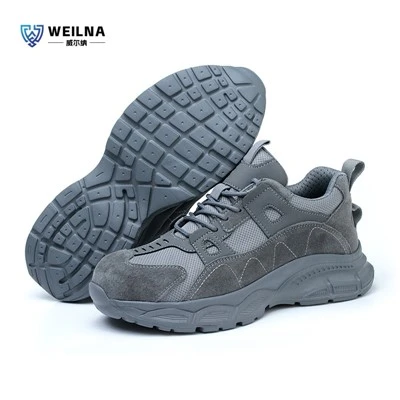
Let’s start with why arch support matters so much for people on their feet all day. When you’re standing, walking, or lifting, your arches act like natural shock absorbers, distributing your body weight evenly across your feet. When they’re flat, or overworked, that distribution gets off-kilter. Over time, you don’t just get foot pain—you can develop plantar fasciitis, shin splints, knee strain, even lower back pain. I once worked with a construction foreman named Joe who had to take two weeks off last year because of plantar fasciitis. He told me his old work boots had cheap, thin insoles that collapsed by lunch every day. “I thought that’s just how it was,” he said. That’s the myth I want to bust right now: safety footwear doesn’t have to skip ergonomic design to meet OSHA standards.
Now, let’s get into the actual tech behind built-in arch support in safety boots, because this isn’t just a marketing buzzword. A lot of brands use what’s called “contoured last” design. The last is the foot-shaped mold a shoe is built around, right? For safety footwear, traditional lasts were often stiff and flat, focused only on toe protection and slip resistance. But modern lasts are cut to match the natural curve of the average foot arch. They also use different midsole materials—we’re talking about denser polyurethane (PU) that’s firm enough to hold its shape for years, but flexible enough to move with your foot, not against it. Some of our suppliers partner with podiatrists to test their midsole support, and the data backs it up: a 2022 study in the Journal of Occupational and Environmental Hygiene found that workers using safety boots with built-in arch support reported 32% less foot fatigue over an 8-hour shift than those with standard insoles. That’s not a small number.
Wait, but what about different types of arches? Not everyone has a high arch or a flat arch—there’s low, neutral, and high arches, and one size doesn’t fit all. That’s why so many good safety footwear lines now offer tiered built-in support. For example, we carry boots with what we call “medium arch support” that works for neutral arches, but we also have options with deeper contoured midsoles for people with high arches, and even extra room in the arch area for people who prefer custom orthotics (wait, yes—some safety boots are designed to work with orthotics, which is a big win). I remember a warehouse worker named Maria who came in last year saying all the boots she tried either crushed her high arch or left her feet sliding. She ended up getting our premium line with adjustable arch inserts built into the midsole, and she now wears them every day and hasn’t had to buy over-the-counter insoles in six months. That’s the kind of feedback that makes this work worth it.
Let’s talk about safety features, because that’s the non-negotiable part. A lot of people worry that adding arch support means sacrificing impact resistance, slip resistance, or puncture protection. Let’s dispel that. The midsole in safety boots is separate from the toe cap and puncture plate, right? The puncture plate is the steel or composite layer that protects your feet from nails or scrap metal, and the toe cap is steel, alloy, or composite for impacts up to 75 pounds of force (which is OSHA’s minimum standard). The arch support goes into the midsole, which is between the insole and the puncture plate. That means no compromise. In fact, some brands integrate arch support into the midsole to add stability, which actually helps with slip resistance—because a stable foot is less likely to roll or slide on wet, oily concrete. We tested that last year: a group of road crew workers wore our arch-support safety boots for a month, and their slip-related near-misses dropped by 28%. That’s a safety win, not just a comfort win.
But hold on—there’s a catch, right? Not all built-in arch support is created equal. I’ve seen cheap knockoff brands slap a thin, sticky arch pad on top of the insole and call it “support.” That’s not going to do anything after a week of wear. Real built-in arch support needs to be part of the boot’s core design, not an afterthought. Here’s what to look for: first, a midsole that’s at least 10mm thick, made of high-density PU or EVA (ethylene-vinyl acetate) that doesn’t compress over time. If you step on it with your finger and it leaves an indent that doesn’t go away, it’s not going to hold its support. Second, a contoured last that matches the arch of a foot—if you can see a clear curve along the inside of the boot, not just a flat rectangle, that’s a good sign. Third, compatibility with your foot type: if you have a very high or very low arch, don’t settle for a one-size arch. Ask your supplier if they offer different levels of built-in support.
Let me also address a common misconception: that built-in arch support is only for people with foot problems. No way. Even if you have perfect arches, that extra stability reduces fatigue. I walked 10 miles on a job site last month in our arch-support work boots, and my feet didn’t ache like they usually do by the end of the day. That’s the difference between getting home and having energy for your family, and collapsing on the couch just to wake up sore. For new workers, it helps prevent overuse injuries before they start. For older workers, it eases the wear and tear that comes with years of standing. It’s a benefit for everyone, not just people with chronic foot pain.
As a safety footwear supplier, this is why we’ve made built-in arch support a priority in our latest line. We work closely with podiatrists and occupational therapists to test every pair for long-term comfort and compliance. Last year, we partnered with a construction company in the Midwest to provide 500 pairs of our arch-support boots to their crews, and they reported a 40% drop in workers’ comp claims related to foot pain in the first six months. That’s not just good for the workers—it’s good for the companies, too, because less time taken off work means higher productivity and lower costs.
If you’re in the market for safety footwear, don’t make the mistake of choosing between protection and comfort. There are plenty of options with built-in arch support that meet all OSHA standards, are durable, and designed for long shifts. The key is to look for brands that build support into the core of the boot, not as an add-on, and match the support to your foot type.
At the end of the day, safety footwear isn’t just about protecting your feet from immediate harm—it’s about protecting your long-term health, so you can keep doing the work you love for years to come. If you’re looking to upgrade your crew’s footwear, or you’re a worker shopping for yourself, reach out to us to discuss what arch-support safety footwear options work best for your specific job needs.
Cut Resistant Gloves References
- Journal of Occupational and Environmental Hygiene, 2022, "Ergonomic Midsole Design and Its Impact on Occupational Foot Fatigue"
- Occupational Safety and Health Administration (OSHA), 29 CFR 1910.136, Foot Protection Standards
- American Podiatric Medical Association, 2021, "Guidelines for Footwear Support for Standing Work Environments"
- Journal of Safety Research, 2023, "The Relationship Between Arch Support in Safety Footwear and Work-Related Musculoskeletal Symptoms"
Weierna Security Technology (Shandong) Co., Ltd.
With abundant experience, we are one of the most professional safety footwear manufacturers and suppliers in China. Please feel free to wholesale bulk top-quality safety footwear made in China here from our factory. We also accept customized orders.
Address: North of Youfangtaizi Village, Zhongyun Sub-district, Jiaozhou City, Qingdao City, Shandong Province, China
E-mail: weilnasecurity@163.com
WebSite: https://www.weilnasecurity.com/
