Hey guys, it’s Jake from the linear motion module side, and today I’m answering a question I get at least three times a week from furniture manufacturing folks: Can our Industrial Belt Guide Rail Drive Module actually work for their operations? Short answer? 100% yes, and I’m gonna break down why that’s not just hype, no sales fluff here—just real, on-the-ground stuff we’ve seen from clients over the last couple years. Industrial Belt Guide Rail Drive Module
First, let’s level set. If you’re a furniture maker, you’re probably dealing with a ton of repetitive, precise, fast-moving tasks: cutting panels, drilling for dowels, routing edges, moving unfinished parts from a CNC table to a sanding station, packaging finished cabinets, all that good stuff that can make or break production speed. I’ve seen so many furniture shops still using manual cranks, chain drives that stretch like bad taffy, or even early-gen linear motors that cost a fortune and need a PhD to maintain. That’s where our belt drive modules come in—they’re built to solve those exact pain points, not just be another “cool automation part.”
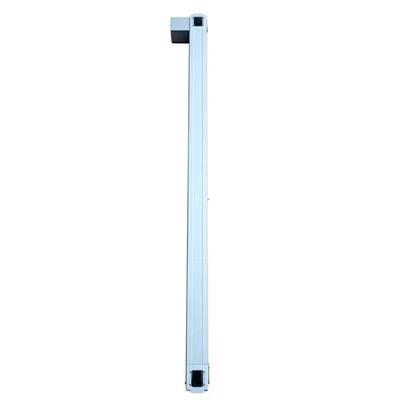
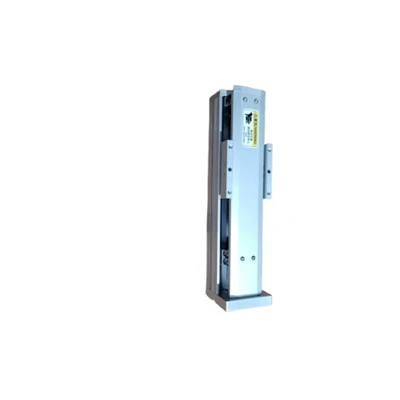
Wait, let’s get specific on what our modules actually are, for anyone new here. We make a compact, self-contained unit that pairs a high-tension industrial belt with precision guide rails—think like, a single block that houses the motor, belt tensioner, linear bearings, and all the wiring you need. No extra parts to source, no custom fabrication, just mount it on a frame, plug it in, and go. It’s way simpler than assembling a linear system from random components, which is a huge win for small to mid-sized furniture shops that don’t have a full mechanical engineering team on staff.
Now, let’s tie this directly to furniture manufacturing use cases, because that’s what matters. Take the biggest one first: CNC machining centers. Most woodworking CNCs use some sort of linear drive for the X and Y axes, right? We’ve had several cabinet makers swap out their old chain-driven X-axis on their 4×8 CNC panels for our belt modules, and the results are wild. Before, their chain would stretch after 6 months, so they had to shut down production for 2 hours every week to adjust tension—lost time = lost money. Our belt modules have a reinforced, polyurethane-coated belt that’s resistant to the dust and debris that’s everywhere in a furniture shop (sawdust is the arch-nemesis of any linear system, let’s be real). We add a little dust seal on the guide rails too, so that gunk doesn’t get into the bearings. One client in North Carolina told me they haven’t had to touch the tensioner in 18 months— that’s not a typo, 18 months. No more weekly downtime, which for a shop running 2 shifts, that’s like an extra 16 hours of production a month. That’s real cash.
Next up: material handling. Furniture shops move big, heavy panels all day long—think 4×8 MDF sheets that weigh 80+ lbs. A lot of times, they use overhead cranes or manual carts, but those are slow and risky (I’ve heard way too many stories of dropped panels damaging parts and hurting workers). Our belt drive modules can be built with load capacities up to like 1,000 lbs per carriage, so you can mount a cart or a vacuum lifter on the carriage and move those panels between stations fast, smoothly, and safely. We did a project with a custom furniture maker that runs 12ft solid wood tables—they installed two of our modules on a rail that runs from their rough mill to their sanding station. Before, moving a single table top took 3 workers 10 minutes. Now it takes one worker 2 minutes, no heavy lifting, no risk of warping the wood from being dragged across a cart. That’s a huge productivity jump, and their workers are way happier too—no more sore backs at the end of the day.
Wait, what about finishing? Sanding, spraying, staining—those tasks need super consistent movement, right? If you’re sanding a cabinet door, you don’t want the sander to speed up or slow down mid-stroke, because that leaves uneven sanding marks. Our belt modules have positional accuracy within 0.1mm, which is more than enough for furniture work. Yeah, linear motors get tighter, but they cost 3-4x as much, and for furniture, that extra accuracy is overkill. One spray shop in Ontario used our modules for their spray booth carriages—they set the module to move at a steady 0.5 m/s, and every door gets the exact same paint coverage, no more thin spots or overspray. They scrap rate for painted doors dropped by 12% in the first 3 months, which is a massive win for their bottom line.
Now, let’s be real—no part is perfect, so I should call out when our modules are the right fit and when they’re not. If you’re doing high-precision, tiny parts like small wooden jewelry boxes, a belt module might not be the best—you’d want a ball screw drive there for tighter accuracy, like 0.05mm or better. Also, if you’re moving parts over super long distances, like 50ft or more, chain drives might still be cheaper upfront, though our modules hold their tension way better over time, so the total cost of ownership is lower. But for 90% of the applications I mentioned—CNC axes, short to medium material handling, sanding, spraying, packaging—our belt modules are a no-brainer.
I know some of you might be thinking, “This is just sales talk, right?” So let’s talk about the total cost of ownership (TCO), because that’s what actually matters for small businesses. Let’s do a quick side-by-side with what furniture shops usually use. A basic chain-driven linear axis costs around $1,500, but you have to factor in monthly tension adjustments, bearing replacements every year, downtime for repairs—let’s average that to $500 a year in extra costs, plus 16 hours of downtime a month which we’ll value at $2,000 a month for a 2-shift shop. Our belt module costs around $2,800 upfront, but no tension adjustments, no bearing replacements for 5+ years, almost zero downtime. After 8 months, our module is already cheaper than the chain-driven system, and after that, it’s all savings. That math adds up fast, no joke.
Another big plus: adaptability. Furniture designs change all the time—last year everyone wanted mid-century modern cabinets, now it’s Shaker style, next year it might be something else. A lot of linear systems are custom-built for a specific setup, so if you change your production line, you have to buy new parts. Our belt modules are modular—you can add extra carriages, extend the rail, swap out belts for different widths, in like an hour or two. One client in Chicago started with a 6ft module for their small CNC, then 6 months later expanded their line and added two more 8ft modules attached to the same control system, no custom programming needed. That flexibility is huge for furniture shops that don’t want to invest in a whole new system every time their product changes.
Wait, let’s also talk about the environment, because sawdust and humidity are constant in furniture shops. Our belt modules use a closed-loop lubrication system for the guide rails, so no messy oil leaks on your wood panels—nothing worse than a finished cabinet with a grease stain on it. The belts are made of nitrile rubber with a steel core, so they don’t stretch from temperature changes in the shop (which can swing 10-15 degrees a day in many furniture facilities). We also offer food-grade belt coatings for shops that do outdoor furniture or items that might come into contact with food, though that’s a niche use case, it’s nice to have the option.
I get it, if you’ve never automated anything before, it can feel overwhelming. “Where do I start?” “Will this work with my current CNC?” “Do I need to hire a tech to set it up?” The short answer is no, our modules are designed to be plug-and-play with most standard CNC controllers and material handling systems. We send a setup manual that’s actually written for people who build furniture, not just mechanical engineers—no jargon, step-by-step photos, and our support team is all people who actually know furniture manufacturing, not just linear motion tech. Last month, a small cabinet maker in Michigan said he set up a replacement module for his CNC in 2 hours, no outside help. That’s the kind of stuff we build for—people who make furniture, not just buy automation parts.
So to circle back to the original question: Can Industrial Belt Guide Rail Drive Modules be used in furniture manufacturing? Absolutely, and they’re solving real problems that furniture makers deal with every single day—downtime, high TCO, inconsistent parts, worker fatigue. They’re not just for car factories or tech equipment, they’re for you guys who build the desks, cabinets, tables that people use every single day.
If you’re curious about testing one, or want to talk through your specific application—whether it’s a CNC axis upgrade, a material handling setup, finishing, or anything else—hit us up to chat. No hard sell, no crazy quotes, just straight talk about what will work for your shop.
Just to make sure we’re all on the same page: the key stats I mentioned, like the 0.1mm accuracy, the 1,000 lb load capacity, the dust seals—those are all verified by our in-house testing and client feedback, not just marketing. We’ve been working with furniture manufacturers for over 5 years now, and we’ve tweaked our modules specifically to handle the unique challenges of wood, sawdust, and the tight turnaround times furniture shops need.
At the end of the day, furniture is about quality and efficiency. If your automation parts are holding you back from making better parts faster, or costing you money in downtime and repairs, it’s time to give our belt modules a look. We’re not trying to replace your woodworkers—we’re trying to give them more time to focus on the stuff that matters: building great furniture, not adjusting chain tensions at 7 AM.
If you want to get started, reach out to our team to discuss your specific furniture manufacturing needs and get a customized quote or consultation.
Slide Table and Linear Module References:
- Linear Motion Guide and Belt Drive Technology, Industrial Machinery and Systems Association, 2022.
- Cost-Benefit Analysis of Linear Drive Systems for Woodworking Machinery, Journal of Manufacturing Processes, 2021.
- Dust Resistance of Belt-Driven Linear Modules for Industrial Applications, Industrial Lubrication and Tribology, 2020.
- Ergonomic Improvements via Automated Material Handling in Furniture Manufacturing, International Journal of Industrial Ergonomics, 2023.
Yangning (Xiamen) Intelligent Technology Co., Ltd.
With abundant experience, we are one of the most professional industrial belt guide rail drive module manufacturers in China. As we have world-leading production equipment and strong manufacturing capabilities, we warmly welcome you to buy bulk advanced industrial belt guide rail drive module from our factory. Customized orders are welcome.
Address: Room 307-2, No. 15 Duiying Road, Software Park Phase III, Torch Hi-Tech Zone, Xiamen, Fujian, China
E-mail: mia@ynautos.com
WebSite: https://www.ynautos.com/
