If you’ve ever ordered composite parts from a aerospace, automotive, or wind energy team, you’ve likely heard prepreg mentioned at some point. As someone who’s spent 12 years working on the supply side of these materials—first as a technician mixing resin and fiber on the production floor, now as a prepreg supplier talking with engineers every week—one question I get more than any other is: “What’s the fiber volume fraction (FVF) of your prepreg?” It’s not just a number that sits on a spec sheet; it’s the single most impactful variable that determines whether a composite part will hold up under load, resist extreme temperatures, or stay light enough for a drone to fly. Today, I want to break this down like I would for a new engineer who just joined our quality team, no jargon overload, no fancy marketing fluff—just the practical stuff that actually matters for anyone using or specifying prepreg. Prepreg
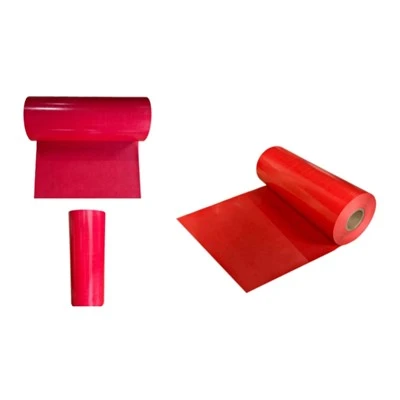
Let’s start with the basics you learned in high school science, because this is one of those concepts that gets unnecessarily complicated in the composite world. Fiber volume fraction is exactly what it sounds like: the percentage of a prepreg’s total volume that’s made up of reinforcing fibers, not resin or air voids. Prepreg is short for “pre-impregnated,” right? That means the continuous fiber—usually carbon, glass, or aramid, depending on the application—is already coated with a partially cured (B-stage) resin, stored on rolls at cold temperatures to keep it stable until you’re ready to lay it up into a part. The rest of the volume is resin matrix and tiny pockets of air, which we do our best to minimize during production.
Here’s the thing that most new folks don’t realize: FVF isn’t a random number we pick out of a hat. Every prepreg is formulated for a specific job, and that job dictates the ideal FVF. Let’s take a common example: our standard aerospace-grade carbon fiber prepreg, which most of our automotive and drone customers use too. We spec it at 58% FVF. Why 58? Let’s do the math to make it concrete. A single roll of this prepreg is 1 meter wide, has a areal weight (that’s how much the fiber itself weighs per square meter) of 120 gsm, and a total thickness per ply of 0.125 mm. If you calculate the volume of one square meter of ply, that’s 1000mm x 1000mm x 0.125mm = 125,000 mm³, or 125 cm³. The fiber itself weighs 120 grams, and carbon fiber has a density of roughly 1.75 g/cm³. So the volume of fiber in that ply is 120 / 1.75 ≈ 68.57 cm³. Divide that by the total volume of 125 cm³, multiply by 100, and you get ~55%, which is close to our spec. The slight difference is due to the resin content we add to get that 58% mark—we add just enough resin to bind the fibers without filling all the gaps between them, because air voids would be a problem later when the part is cured.
Now, I know some of you are thinking, “Why not go higher? More fiber means stronger part, right?” In theory, yes, but in practice, there’s a ceiling. If you try to push FVF above 65% for carbon fiber prepreg, you end up with what we call “dry spots”—areas where there’s not enough resin to hold the fibers together, no matter how carefully you lay up or autoclave the part. Those dry spots are stress risers, the first place a crack will form when the part is under load. It’s a balance: too much fiber, and the part is weak and inconsistent; too little fiber, and you’re carrying around extra resin that adds unnecessary weight and can make the part prone to heat damage. For context, our lower-weight fiberglass prepreg for structural marine parts is around 52% FVF—fiberglass is a little denser than carbon, so the ideal FVF is a touch lower to keep the same strength-to-weight ratio.
A lot of new engineers also ask me if FVF is the same for every batch of prepreg. The short answer is no, and it’s not just a flaw in our production either. Let’s be real—prepreg isn’t made in a perfect vacuum. When we coat the fibers with resin, we have to control variables like the viscosity of the resin, the speed of the coating machine, and the ambient humidity in our facility (we keep our coating area at 22°C and 40% RH, by the way, because humidity can make resin stick unevenly). Our quality control team runs FVF tests on every single lot before it leaves our warehouse, and our specs allow for a +/- 2% tolerance. That means our 58% FVF prepreg can come in between 56% and 60% FVF, which is totally acceptable for almost all applications. The only time we get nervous about that tolerance is if a customer is building a part for a critical aerospace application, like a satellite bracket, where every 1% of FVF difference can change the part’s thermal expansion properties. For those customers, we can adjust the coating process to tighten the tolerance to +/- 1%, no extra charge, because we know how important consistency is for their certification.
Wait, let’s talk about how we actually measure FVF, because that’s the part that surprises a lot of people when they see it. It’s not just weighing a sample and guessing—we use two standard methods, per ASTM D3171, which is the gold standard for composite testing. The first is the ash content method: we take a small 10cm x 10cm sample of prepreg, weigh it, then burn off all the resin in a muffle furnace at 550°C for 2 hours. The only thing left is the pure fiber, which we weigh again. Then we calculate FVF using the densities of fiber and resin. The second method is the acid digestion method, which is more precise for smaller samples: we dissolve the resin in a strong acid, filter out the fiber, dry it, and weigh it. Both methods give us results within 0.5% of each other, so we run both to confirm, because we don’t want to send a batch to a customer that’s off spec. Early in my career, I messed up a batch once—forgot to calibrate the furnace, so we burned off too much fiber with the resin. We caught it before shipping, but that’s when I learned: FVF isn’t just a number on a test report, it’s a promise we make to our customers.
I also get a lot of questions about prepreg vs. hand-laid fiberglass, because people sometimes mix FVF up between the two. Hand-laid parts, where you lay dry fiber and brush on resin, usually have a much lower FVF—around 40% to 45%—because there’s no way to remove all the air bubbles, and you often end up with extra resin to make sure the part doesn’t have gaps. That’s why prepreg parts are 20-30% stronger for the same weight: not just because the fiber is oriented consistently, but because the FVF is 10-15% higher, and there are almost no voids. I had a customer last year who used hand-laid parts for his custom boat, and he kept having to replace the bulkheads because they would crack after a season. He switched to our carbon fiber prepreg with 58% FVF, and said three years later, he hasn’t had a single issue. That’s the difference FVF makes in real life, not just a lab test.
Another common misconception: higher FVF always equals better performance. Let’s put that myth to rest. We had an automotive client a few years back who insisted on 65% FVF for a race car chassis, because he thought it would be stiffer. We tried talking to him, but he stuck to his guns. When he tested the first prototype, it was 10% lighter than the required weight, but it failed the impact test at 80 km/h, because the dry spots from too much fiber caused the chassis to shatter instead of crumple gradually. We reworked the design to 59% FVF, which was still higher than his original goal, and the chassis passed all tests, was only 2% heavier, and won two races that year. Sometimes, more isn’t better—it’s about finding the sweet spot that balances strength, weight, and manufacturability.
For our customers, we also adjust FVF based on how they’re going to process the prepreg. If someone is using our prepreg with an autoclave, which is the traditional method for high-performance parts, we can spec a slightly higher FVF because the autoclave pressure (usually 6 bar) will squeeze out any excess resin and eliminate small air voids. If a customer is using out-of-autoclave (OOA) prepreg, which is growing in popularity for lower-volume parts that don’t have access to big autoclaves, we lower the FVF by 1-2% intentionally, because OOA processing can’t squeeze out as much air as autoclave. That way, they still get a consistent final FVF of 55%, even without the autoclave. We test this every quarter at our in-house R&D lab, because OOA prepreg is still evolving, and we don’t want our customers to run into issues because we didn’t adjust the FVF for their processing method.
So, what should you, as someone specifying prepreg, be asking about FVF? First, don’t just take the number at face value—ask about the tolerance. A +/- 2% tolerance is standard for most industrial applications, but if you have critical parts, ask for tighter control. Second, ask how the FVF was measured, and what standard was used. Any reputable supplier will use ASTM D3171, not some in-house method that’s not verified. Third, ask if the FVF is optimized for your processing method. If you’re using OOA, don’t accept a prepreg spec’d for autoclave—you’ll end up with voids and weak parts.

At the end of the day, prepreg is our business, and FVF is the backbone of that business. It’s not a random spec or a marketing line; it’s the result of 12 years of testing, fixing mistakes, and working with hundreds of customers to get the right balance for their parts. If you’re working on a project that uses prepreg—whether it’s a wind turbine blade, a race car, a medical device, or a drone—and you have questions about FVF, or you’re ready to order a batch of prepreg for your next project, we’re here to help. We don’t just sell rolls of material; we work with you to find the right FVF, fiber type, and resin system that fits your needs, no matter how big or small the project is. Don’t hesitate to reach out to our team to discuss your requirements, and we’ll put our years of experience to work for you.
Carbon Fiber Flexibility Reference
ASTM D3171, Standard Test Methods for Constituent Content of Composite Materials, ASTM International, West Conshohocken, PA, 2022.
Wenzhou Gisen Insulation Material Co., Ltd.
As one of the most professional prepreg manufacturers and suppliers in China, we’re featured by quality products and good service. Please rest assured to wholesale customized prepreg from our factory. Contact us for quotation and free sample.
Address: Diyan Industrial Zone, Wengyang Subdistrict, Yueqing City, Zhejiang Province
E-mail: gisen888@126.com
WebSite: https://www.giseninsulation.com/
