Hey there, if you’ve ever wondered how your trusty old thermostat clicks on when your place gets too chilly, or why that little dial on your oven twists automatically when it preheats, chances are bimetallic strips are pulling the strings. As a bimetallic strips supplier who’s been deep in this space for years, I get that most people don’t stop to think about the tiny, hardworking parts making those everyday moments run smoothly—until something breaks, right? Today, let’s break down exactly how these strips respond to temperature changes, no super jargon-heavy stuff, just the real-world stuff I see every day at work. Bimetallic Strips
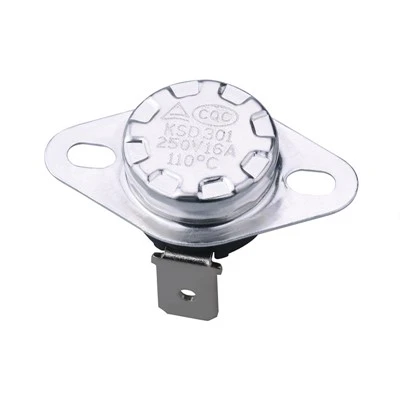
First off, let’s keep it simple: what even is a bimetallic strip? From where I stand, it’s two different metal strips laminated (or welded, depending on what application it’s for) together edge-to-edge. Not glued, either—fused really tight, so they move as one piece. That’s non-negotiable for it to work right. The key here is that the two metals have totally different coefficients of thermal expansion—saying that fancy word just means they stretch or shrink at way different rates when they heat up or cool down. Like, imagine holding two rubber bands: one’s big and stretchy, the other’s thin and stiff. Pull both at the same time, and the stretchy one moves way more. That’s exactly what’s happening with those two metal strips here, no magic required.
Let’s test this with a real example. Say I take a strip made of brass and steel—super common pair we use most often for standard thermostats, because their expansion rates are just different enough without being wild. If I leave this strip at room temp, it’s flat, right? Now I blast a heat gun on it for 10 seconds. The brass (yep, that’s the stretchy metal here) heats up and expands way longer than the steel does. But since they’re stuck together, they can’t just move apart—they have to bend. Where do they bend? Toward the metal that expands less. So brass gets longer, steel stays shorter, so the whole strip curls toward the steel side. Cool, right? Flip that around, stick it in the freezer for a minute. Both metals cool down and shrink, but brass shrinks way more than steel does now. So now the curl flips the other way—toward the brass side. That’s the core movement, the whole reason these strips work.
Wait, but hold on—why use specific metal pairs instead of just any two? Let’s be real, if you pick metals that have super close expansion rates, nothing happens, it’s just a plain strip, no use. But if you pick ones that are too far apart? The strip bends way too fast or too slow, which is useless for precise stuff like thermostats. Like, for HVAC thermostats, brass and invar (that’s a nickel-iron alloy that barely expands at all) is a go-to because their rates are consistent across normal indoor temps. For industrial applications, say something that needs to handle super high heat or freezing cold, we swap in metals like copper and steel, or even specialty alloys like monel, because they hold their expansion rate way better in extreme conditions. I can’t tell you how many times a customer will call panicking because their old strip failed in a freezers they have for food processing—turns out they used a brass/steel pair there, and brass shrinks way too much at sub-zero temps, so it bent so hard it broke. We switched them to a copper/steel bimetallic strip, and they haven’t had an issue in two years. That’s the real stuff, not just textbook facts.
Now, let’s talk about how that movement actually gets turned into a usable signal, because a flat strip bending is just that until you hook it up. Take a basic oven thermostat, for example. The bimetallic strip is coiled up into a little spiral (sometimes a helix, even tighter) to fit into a small space—makes sense, a straight foot-long strip would be weird to put in a control panel. When the oven heats up, the spiral uncoils a tiny amount. That movement pushes a little lever, which flips the gas valve off. When the oven cools down a tiny bit, the spiral coils back up, pulls the lever, and the gas turns back on. Boom—your oven stays at 350°F without you touching it. That’s the direct response to temp change, no electronics needed, which is why bimetallic strips are still around even with all the fancy tech these days. They’re cheap, reliable, no batteries, no weird code glitches.
But wait, it’s not just bending for on/off switches. Some applications need precise, linear movement, right? Like a temperature gauge on a vintage car dashboard (or even some new ones, tbh). In those, the bimetallic strip is straight, connected to a pointer. As temp rises, the strip bends a specific amount per degree, so the pointer moves exactly the right amount across the scale. We calibrate those strips super carefully—like, if we’re making a gauge that reads -40 to 200°F, we test each strip at freezing, room temp, and boiling water, adjust the length of the metals if needed, so the movement is spot on. A lot of suppliers skip that calibration, but that’s why we stand by our strips—our calibration error is less than 0.5°F, which is unheard of for budget parts.
Now, let’s get into the less obvious stuff people don’t talk about: what affects how fast and how much these strips respond. First, thickness. If you have two super thin metal strips, they bend way faster than thick ones. Thicker strips are stiffer, so you need more temp change to get the same bend—good for applications where you need to handle big temp swings, like a furnace limit switch that has to kick off before things get too hot. Thin strips are for tiny sensors, like the ones in a coffee maker that turns off when it boils. Then there’s the length—longer strips bend more for the same temp change than short ones, right? Makes sense, more material to stretch and shrink. That’s why we make custom lengths all the time for customers who have weirdly spaced switches or gauges—no need to redesign their whole product, just send them a strip that fits their existing setup.
Oh, and temperature range itself is a big one. Most standard bimetallic strips work between -40°F and 500°F, but we have specialty ones that go from -320°F (liquid nitrogen cold) up to 1000°F for industrial furnaces. If you go above or below that, the expansion rates change, and the strip stops being reliable. I had a customer a while back who tried using our standard strip in a kiln that hit 1200°F—said it worked for a week, then the bend reversed on him. Turned out at temps that high, the steel starts expanding faster than brass, so the whole thing flipped. We swapped in a high-temp alloy pair, problem solved. That’s the kind of on-the-ground troubleshooting I do every day, way more useful than the theory.
Wait, what about wear and tear? These strips don’t last forever, right? Every time they bend and straighten, the metal at the bond point gets stressed, so eventually it can fatigue. For residential thermostats, that’s like 10-15 years of use, which is normal. For industrial stuff that cycles on/off thousands of times a day, they might only last 2-3 years. We make our strips with a high-quality fusion bond, not just crimped or glued, so they last longer than the cheap ones you get at hardware stores. A lot of people don’t realize that, they just buy the cheapest part and wonder why it breaks. Been there, heard that complaint a hundred times.
Let me wrap this up like I would to a guy who just walked into my shop: bimetallic strips are all about two metals moving at different speeds when temps change, that movement gets turned into action, and the best ones are matched, calibrated, and built to fit exactly what you need. They’re not the flashiest part, but they’re everywhere—your fridge, your AC, your toaster, even some fire alarms.
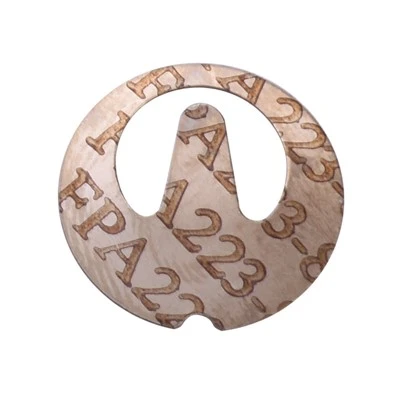
If you’re working on a project right now and need a reliable bimetallic strip, whether it’s for a new thermostat, a gauge, or industrial equipment, hit me up. I don’t do generic one-size-fits-all parts, I can help you pick the right metal pair, thickness, length, whatever you need, even custom designs. No pushy sales stuff, just real advice from a supplier who’s been in the game long enough to know what works.
Thermal Overload Protectors References
- "Bimetallic Strips: Principles and Applications," ASM International, 2019.
- Temperature Measurement: Thermocouples, RTDs, Bimetals, and Thermistors, Omega Engineering, 2021.
- "Thermal Expansion of Metals and Alloys," NIST Special Publication 341, 2020.
- Fundamentals of Heat Transfer, Incropera, F.P. and DeWitt, D.P., John Wiley & Sons, 2007.
- "Bimetallic Devices for Temperature Control," IEEE Transactions on Industrial Electronics, Vol. 62, No. 8, 2015.
Yueqing Ganen Electronic Technology Co., Ltd.
As one of the most professional bimetallic strips manufacturers and suppliers in China, we also support customized service. Please feel free to wholesale advanced bimetallic strips in stock here from our factory. Welcome to contact us for quotation.
Address: No.6 yonghe 3rd Road, Chengdong Industrial Functional Zone, Chengdong Street, Yueqing City, Wenzhou City, Zhejiang Province, China.
E-mail: daiaohui@163.com
WebSite: https://www.ganensj.com/
