If you’re running a warehouse, distribution center, or any space relying on electric forklifts, you’ve probably caught yourself staring at a dead battery and thinking—how long is this gonna take to fix? I get it. When your forklifts are out, your whole workflow grinds to a halt. As an electric forklift supplier, I field this question every single week, and it’s not a one-size-fits-all answer. Let me break this down straight, no jargon, just what actually happens, what slows things down, and how you can avoid the worst delays. Electric Forklift
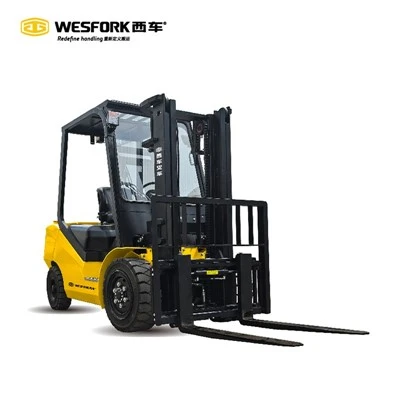
First, let’s clear up a common myth: replacing an electric forklift battery isn’t like swapping a car battery in your driveway. For one thing, forklift batteries are way bigger—think 1,000 to 3,000 pounds, depending on the model. They’re heavy, bulky, and require specific equipment to move, so the timeline depends on way more than just “unplug and plug back in.”
Let’s start with the basics: what counts as a “replacement”? A lot of folks mix up battery replacement with battery swapping. If your facility uses a two-battery setup (standard for most 8-hour shifts), swapping a fully charged battery for a dead one usually takes 15 to 30 minutes. That’s the quick, daily swap you see in warehouses—no waiting for a tech to pull parts, no deep diagnostics, just using a forklift battery handler (a little overhead crane or rolling cart designed for that exact task) to yank the old one out and drop the new one in. That’s the fast turnaround most operations aim for, because it lets you keep one forklift running without downtime.
But if you’re talking about a full battery replacement—like, your old battery is dying, it won’t hold a charge anymore, or you’re upgrading to a higher-capacity unit—that’s a different timeline. Let’s walk through the steps, because that’s where the time adds up.
First, the pre-replacement prep. If you’re working with a supplier (hi, that’s me), we don’t just drop a battery at your door and show up to swap it. We start with a site assessment. Wait, why? Because a lot of older warehouses don’t have the right space or equipment to handle a heavy forklift battery. For example, if your battery room is tucked in a corner with no overhead crane, we might need to bring in a mobile handler, which adds a tiny bit of time. Or if your forklift model is 10 years old, we have to make sure the new battery’s dimensions and terminal setup match the forklift’s compartment. That assessment usually takes 30 minutes to an hour, depending on how busy your space is.
Next, getting the battery ready. If you’re buying a new battery (not just swapping a used one), it’s not charged when it leaves the factory. Lead-acid batteries, the most common type for electric forklifts, need a initial “formation charge” that takes 8 to 12 hours. Lithium-ion, which is growing in popularity because it charges faster and lasts longer, still needs a pre-charge before it’s safe to install—usually 2 to 4 hours, but that’s way less than lead-acid. If we’re doing the swap on-site, we factor that charging time into the overall timeline. No one wants to install a battery that’s only 50% charged and die mid-shift, so skipping that step isn’t an option.
Then, the actual swap or installation. Let’s split this by battery type, because that’s a big factor. For lead-acid: once the old battery is out, you have to clean the terminals, check for corrosion, make sure the vent caps are tight (to prevent acid leaks), and secure the new battery in the compartment. That process takes 20 to 45 minutes, depending on how accessible your battery compartment is. Some newer forklifts have quick-release latches that cut that time down, while older models might require tools to remove side panels, adding 10 or 15 minutes. For lithium-ion, the process is simpler—no vent caps to check, the terminals are sealed, and the mounting locks are often faster to engage. That swap takes 15 to 30 minutes, hands down.
Wait, but what about unexpected delays? Because this is the real world, not a textbook. I’ve had clients wait an extra day because their forklift’s battery compartment had rusted pins that wouldn’t line up with the new battery’s terminals. Or another time, a facility didn’t realize their power outlet in the battery room was 20 years old and couldn’t handle the new lithium-ion’s charging speed, so we had to bring an electrician out to upgrade it. Those hiccups can add anywhere from a few hours to a few days, which is why communication with your supplier before you start is key.
Now, let’s talk about when you might not need a full replacement—just a repair. A lot of people call me saying “my forklift battery is dead, I need a replacement,” but it’s just a bad cell. Replacing a single cell in a lead-acid battery takes 1 to 2 hours, and it’s way cheaper than a whole new battery. Lithium-ion batteries are almost never repaired, since their cells are sealed and integrated, so if a lithium-ion fails, you’re looking at a full replacement. That’s an important distinction to remember: not every battery issue is a full swap.
I get asked a lot if you can speed this up. The short answer is: yes, if you plan ahead. Here’s what works for our clients:
- Don’t wait until the last minute to check your battery. Most lead-acid forklift batteries last 3 to 5 years, lithium-ion 5 to 10 years. If yours is approaching that mark, order a replacement a month before it dies, so you don’t have to rush.
- Have the right equipment on-site. If you don’t have a battery handler, rent or buy one ahead of time—delaying a swap because you don’t have a crane is the worst.
- For multi-shift operations, keep a spare battery on hand. That’s the whole point of the two-battery setup: you can swap in 20 minutes and get back to work, no downtime.
- If you’re switching to lithium-ion, ask your supplier about pre-configured batteries. We have a lot of clients who choose lithium-ion specifically because the charging and swap time is cut in half—they can charge a battery in 1 hour instead of 8, so they don’t even need a spare for single-shift operations.
Wait, let’s throw in a real example to make this concrete. Last quarter, we worked with a third-party logistics company in Chicago. Their lead-acid batteries were 4 years old, and they were losing charge mid-shift during peak holiday season. They came to us panicked, needing a replacement for 5 of their 12 forklifts. Here’s how it went: first, we did the site assessment (30 mins) to confirm their handlers were up to date. We ordered 5 new lead-acid batteries, which needed a 12-hour formation charge. We scheduled delivery for 9 a.m. the next day, so when the batteries arrived, they were ready to charge. We swapped each one in 30 minutes flat—total time per forklift, from unboxing the battery to getting it on the floor, was about 13 hours (12 charge + 1 swap). They had minimal downtime, only 2 hours per forklift during the swap, which way better than the 3 days they were expecting if they’d tried to source and install batteries on their own.
Another client, a small retail warehouse in Dallas, switched to lithium-ion for their two forklifts. They didn’t have space for a big battery room or a spare handler. We pre-configured the lithium-ion batteries, delivered them, and showed their team how to swap them in 10 minutes each. They charge the batteries overnight (2 hours) instead of needing a formation charge, so they never have to worry about a dead forklift. Their total replacement time was just 2 days, compared to the 5 days they’d planned for with lead-acid.
Now, what about common mistakes that make replacement take longer? Let’s name them:
- Skipping the pre-check: I once had a client who ordered a battery without checking the dimensions, and it was 6 inches too wide to fit in their forklift. They had to send it back, wait a week for a custom order, and lost 10 days of productivity.
- Forgetting about permits: Some cities require permits for moving heavy industrial equipment. If your warehouse is in a historic district or a tight industrial park, that permit can take 3 to 5 business days. Always ask your supplier if permits are included in the timeline.
- No backup plan: If you only have one forklift and it’s out for replacement, that’s a full shutdown. Which is why keeping a spare (or a relationship with a rental forklift) is a lifesaver.
So, to circle back: how long does it actually take to replace an electric forklift battery? It breaks down like this:
- Quick swap (same battery type, just swapping a dead for a charged): 15-30 mins per battery.
- Full lead-acid battery replacement (new battery + installation, including formation charge): 1-2 days, depending on delivery and charging time.
- Full lithium-ion battery replacement: 1-2 days, since pre-charge time is shorter, and installation is faster.
- Repairing a battery cell (not full replacement): 1-2 hours.
That’s way more specific than the vague answers you’ll find on generic sites, right? Because as a supplier, I know every facility’s needs are different. Some of our clients have 20 forklifts in a big warehouse, others have 2 in a 10,000 sq ft retail space—one size doesn’t fit all.
Counterbalance Stacker If you’re currently dealing with a dead forklift battery, or you’re thinking about upgrading, don’t stress about guessing the timeline. Reach out to us, we’ll walk you through your specific setup, no sales pitch, just straight answers. We’ll help you figure out if you need a full replacement, a repair, or even a switch to lithium-ion to cut your downtime way down. No hidden fees, no fine print—just what you need to keep your warehouse running.
References
- Industrial Truck Association. (2022). Electric Forklift Battery Maintenance and Replacement Guidelines.
- Battery University. (2021). Lead-Acid vs. Lithium-Ion Batteries for Industrial Applications.
- Occupational Safety and Health Administration. (2020). Safe Handling and Installation of Industrial Batteries.
- Material Handling Industry Association. (2023). Forklift Battery Swap and Installation Best Practices.
WESFORK Industries (Zhejiang) Co., Ltd.
As one of the most professional electric forklift manufacturers and suppliers in China, we also support customized service. Please feel free to wholesale high quality electric forklift for sale here from our factory. For price consultation, contact us.
Address: 277#Yinhu Road,Yinhu Street,Fuyang District,Hangzhou City,Zhejiang Privince,China
E-mail: sulin@wesfork.com
WebSite: https://www.wesforkintl.com/
