If you’ve ever walked past a printing press or held a crisp, evenly printed poster, cereal box, or magazine spread, you’ve held a product that relied on a tiny, unassuming workhorse: the anilox roller. For nearly as long as flexographic printing has been a mainstream method for packaging, newspapers, and commercial print, traditional anilox rollers have been the go-to for metering ink onto printing plates. But over the last two decades, a newer, more durable alternative—ceramic anilox rollers—has taken over most high-volume print runs, leaving many print operators, press owners, and even newer suppliers to wonder: what’s actually the difference between the two? As someone who’s spent 12 years designing, manufacturing, and supplying ceramic anilox rollers to print shops across North America and Europe, I’ve fielded this question a hundred times, usually from seasoned press operators who’ve cut their teeth on steel traditional rollers and are trying to decide if upgrading is worth the investment. Let’s break this down not just as a spec sheet comparison, but as something you’ll actually notice in your daily production, downtime, and bottom line. Ceramic Anilox Roller
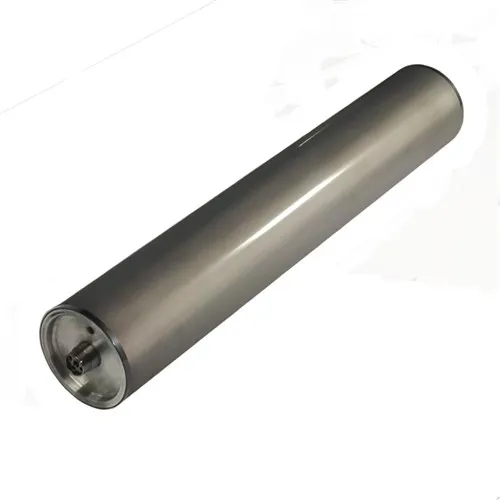
First, let’s start with the basics to level set. Traditional anilox rollers—often called steel rollers by the trade—are constructed from a solid steel core, usually mild steel or carbon steel, that’s machined to precise dimensions. Once machined, the surface is engraved with tiny, uniform cells: those cells are what hold and transfer ink from the ink fountain to the printing plate, controlling the exact amount of ink that hits the substrate (paper, plastic, corrugated cardboard, whatever you’re printing on). For decades, the only way to create those cells was with mechanical engraving, a process where a sharp, diamond-tipped tool is dragged across the steel surface, carving individual v-shaped or pyramidal cells into the metal. That works fine in theory, but steel is a soft, porous metal—so those cells wear down fast once you put the roller into a high-speed press.
Ceramic anilox rollers, by contrast, start with the same solid steel core, but before engraving, the surface is coated with a dense layer of engineered ceramic, usually chromium oxide, applied via thermal spray. The coating is not the flimsy enamel you might think of from old kitchen tiles; it’s a hard, non-porous layer that’s nearly as tough as sapphire, with a hardness rating of around HRA 85 to 90, compared to mild steel’s HRA of around 50 to 60. Once the ceramic coating is applied, it’s engraved with lasers, not mechanical tools. That’s a key point: laser engraving is far more precise than mechanical engraving. A laser can carve cells with consistent depth, volume, and shape within a tolerance of thousandths of a millimeter, no tool wear, no slight variations that come from dragging a diamond tip across a hard surface. The result is cells that hold ink more evenly across the entire length of the roller, which translates to more consistent print quality from the first impression to the 100,000th.
But let’s get past the surface specs, because that’s where most people stop reading. The real differences show up when you run the roller in a production environment, and that’s where I’ve seen ceramic rollers pay for themselves over and over again. Take wear, for example. I had a customer last year who ran corrugated box printing 24 hours a day, five days a week, on a 10-color flexo press. He was going through two traditional steel rollers a month—each set him back about $1,200, plus the labor to change them out, which took 45 minutes per roller. When he switched to ceramic rollers, he went 18 months without needing to replace a single anilox roller. Why? Because steel’s soft surface means that as the roller spins against the doctor blade (the blade that wipes excess ink from the roller), the edges of the cells wear down. Over time, those rounded cells hold less ink than they’re rated for, so your prints start coming out light, faded, or uneven. With ceramic, that wear is negligible. Even after a million impressions, the cell walls stay sharp, the volume stays consistent, and you don’t get print quality drift halfway through a run. That’s not just a quality win—it’s a productivity win, too. Downtime for roller changes cuts into your output, and rework for faded prints eats into your margins.
Another big difference is chemical resistance. Traditional steel rollers, being made of mild steel, are vulnerable to corrosion, especially if you’re using water-based inks, UV-curable inks, or any of the newer eco-friendly ink formulas that are so popular in packaging now. Those inks often have additives that break down the steel surface, leading to rust, pitting, and cell clogging. Clogging is a huge pain point for print operators: when ink dries or gets trapped in the cell walls, you get tiny spots or gaps in your prints that require stopping the press to clean the roller. Ceramic, though, is non-porous and inert. It doesn’t react with almost any ink chemistry out there, so it resists corrosion and clogging far better than steel. I had another customer a few years ago who switched from traditional rollers to ceramic specifically because he was dealing with constant clogging from UV inks. He was spending three hours a week cleaning rollers, plus an extra hour every run patching clogged cells. After the switch, cleaning time dropped to 20 minutes a week, and he eliminated almost all the small defects that were making his clients return runs for reprint.
Wait, but let’s be honest—ceramic rollers aren’t perfect, and traditional rollers still have a place. I’m not here to tell you to toss all your steel rollers tomorrow. For short runs, like under 10,000 impressions, traditional steel rollers are cheaper upfront. A set of steel rollers for a 10-color press might cost $10,000 total, compared to $18,000 for a comparable set of ceramic rollers. If you’re only running a small job once a month, the upfront cost of ceramic might not make sense, because you won’t get the wear benefit to offset that investment. But for runs over 50,000 impressions, especially high-volume, high-precision jobs like food packaging labels, cigarette boxes, or large-format corrugated, ceramic is the clear winner. It also holds up better to higher line speeds—modern presses run at 1,000 feet per minute, sometimes faster, and the doctor blade pressure that works for steel rollers can start to deform or damage them over time. Ceramic can handle that same pressure with no issue, so you can run at full speed without worrying about roller failure.
Another point that doesn’t come up enough is cell geometry. Mechanical engraving on steel is limited to a few cell shapes—mostly v-shaped or pyramidal—because that’s what the diamond tool can carve. Laser engraving, on the other hand, can create a huge range of cell shapes, from hexagonal to grid-like to even custom shapes tailored to specific ink types. For example, if you’re printing fine text or halftone images, a hexagonal cell shape holds ink more evenly and transfers it more smoothly than a v-shape. If you’re printing thick, heavy ink for a poster, a deeper, larger volume cell is better. With traditional rollers, getting that custom cell shape would be prohibitively expensive and hard to replicate consistently. With ceramic, it’s standard, and the laser engraving means every roller you get from us will have the exact same cell volume and shape as the last one, so you don’t have to adjust your press settings every time you swap out rollers.
I also want to talk about longevity from a maintenance and repurposing standpoint. Traditional steel rollers can be reconditioned a few times, but because they’re soft, each regrind removes material, and eventually you run out of steel to grind, or the cells become too shallow to hold the right ink volume. Ceramic rollers, though, can be reconditioned up to 10 times over their lifespan, because the hard ceramic coating is thick enough to handle multiple regrinds and re-engraving. That means you’re not throwing away a whole roller when the cells wear—you just send it back, we re-grind it, re-engrave it to the same specs, and send it back to you. That cuts down on waste, which is a big plus for print shops that are trying to be more sustainable, and it also brings the cost per impression way down. Let’s do the math: a traditional roller costs $1,200, lasts about 200,000 impressions. That’s $0.006 per impression. A ceramic roller costs $2,000, lasts about 1.5 million impressions, and can be reconditioned three times for $400 each. Over its entire lifespan, that’s ($2,000 + $1,200) divided by 5 million impressions, or about $0.00064 per impression. That’s almost a 10x lower cost per impression, and that’s not even factoring in downtime, rework, or labor savings.
Now, I know some old-school press operators will push back and say, “I’ve run steel rollers for 30 years, they work fine for me.” And to an extent, that’s true—if you’re running small jobs, low line speeds, and basic inks, traditional rollers will work. But the print industry has changed a lot in the last decade. Clients expect higher print quality, faster turnaround, more eco-friendly inks, and lower costs. Ceramic rollers aren’t a luxury anymore—they’re a necessity for competing in today’s market. I had a customer in Chicago who ran a small packaging shop, only doing runs under 20,000 impressions, and he swore by his steel rollers for years. Then a big retail client came to him with a 100,000 impression run for a cereal box, with strict print quality requirements: no faded text, no uneven color, and it had to be delivered in two weeks. He tried his usual steel rollers, and half the run came out with light blue bars that he couldn’t fix with press settings. He ended up having to send the run to a competitor, who had ceramic rollers, and he lost the client. That’s the kind of loss that hits small shops hard, and it all came down to the difference between a roller that can hold consistent ink volume and one that wears out halfway through a long run.
Let me also address a common myth: that ceramic rollers are more likely to crack or chip. In all my years in this business, I’ve only seen a handful of ceramic rollers fail from chipping, and almost all of those were from improper handling—like dropping a roller or overtightening the doctor blade to the point that it damaged the ceramic edge. Steel rollers scratch and dent all the time, but you don’t notice it as much because the surface is soft; the dent just deforms the surface, while a ceramic chip is a hard, visible defect. But if you handle rollers properly, and set your doctor blade pressure correctly, ceramic rollers are actually more durable than steel, because they don’t scratch or dent during normal operation.
At the end of the day, the choice between a ceramic anilox roller and a traditional anilox roller comes down to your operation’s size, run length, print quality needs, and bottom line. If you’re a small shop running short, low-precision jobs, traditional rollers are still a viable, cost-effective choice. But if you’re running high-volume jobs, dealing with eco-friendly inks, needing consistent print quality across long runs, or looking to cut downtime and rework, ceramic anilox rollers are almost always the better investment. We’ve supplied rollers to print shops ranging from one-person flexo operations to large 24/7 packaging plants, and we’ve seen time and time again that the shops that make the switch to ceramic see a 20-30% drop in production costs within the first year, just from reduced downtime and less rework.
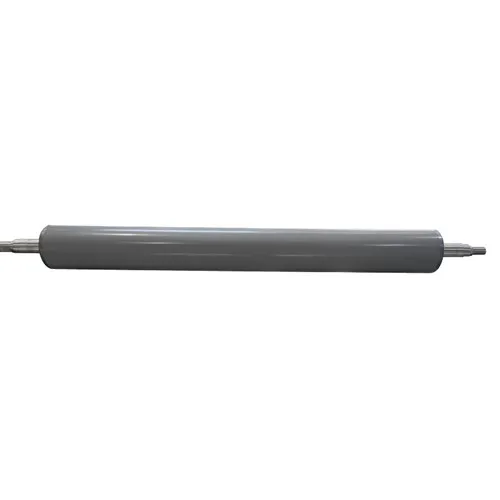
If you’re tired of faded runs, constant roller changes, or rework from uneven print quality, it’s worth reaching out to talk through what your specific operation needs. We work with customers to design custom rollers tailored to their press, ink types, and run lengths, so you don’t have to guess which roller is right for you. Don’t hesitate to connect with our team to discuss your requirements, compare roller options, and see how ceramic anilox rollers can improve your production and your bottom line.
Anilox Sleeve References:
- “Anilox Rollers: Material and Performance Differences,” Printing Industries of America, 2021.
- Ceramic Anilox Roller Technology, Flexographic Technical Association, 2019.
- “Cost-Benefit Analysis of Anilox Roller Choices for Flexographic Printing,” Journal of Printing Science and Technology, Vol. 62, No. 3, 2020.
Kunshan Hanhan Co., Ltd.
We’re well-known as one of the leading ceramic anilox roller manufacturers and suppliers in China. We warmly welcome you to buy high quality ceramic anilox roller made in China here from our factory. If you have any enquiry about cooperation, please feel free to email us.
Address: No. 1093, B Zone, No. 2 Xugongqiao Rd, Huaqiao Town, Kunshan City, Suzhou, Jiangsu, China
E-mail: info@kshhroller.com
WebSite: https://www.kshh-roller.com/
