If you’ve ever stood near a construction site where concrete slabs are being broken up for demolition, or rock being split to make way for a new road, chances are you’ve heard the sharp, rhythmic thud of a hydraulic breaker. As someone who’s supplied these machines for over a decade, I get asked one question more than any other: “What’s the energy efficiency of a hydraulic breaker?” It’s a fair question—especially when contractors are staring at tight budgets, rising fuel costs, and endless pressure to get jobs done faster without wasting resources. Hydraulic Breaker

I’ll be honest here: energy efficiency isn’t a single number you can pull off a spec sheet. It’s a mix of how the breaker is designed, how it’s matched to your carrier (that’s the excavator, skid steer, or backhoe it attaches to), and how the operator uses it. I’ve seen breakers that should be efficient end up burning through fuel like it’s water, and I’ve seen older models outperform new ones just because they fit the job right. Let’s break this down like I’d explain it to a new contractor walking through my warehouse—no jargon, just real-world stuff I’ve learned from sitting behind counters, visiting job sites, and troubleshooting more breakers than I can count.
First, let’s start with the basics: what makes a hydraulic breaker work, and where its energy goes. A hydraulic breaker is essentially a hammer powered by the hydraulic system of your carrier. When you flip the switch, pressurized fluid from the carrier’s pump flows into the breaker’s cylinder, pushing a heavy metal piston forward to strike a chisel. Then the fluid is redirected, pushing the piston back to get ready for the next strike. Each strike is a transfer of hydraulic energy into mechanical force that breaks rock, concrete, or asphalt.
Energy efficiency here is all about how much of that hydraulic energy actually turns into useful work (breaking material) vs. what’s lost as heat, vibration, or noise. Think of it like a car: if your engine is only turning 20% of the gas you put in into moving the car, that’s inefficient. For hydraulic breakers, typical efficiency numbers hover between 50% and 70%—but that’s only when everything is lined up correctly. The real story is in what affects that range.
The biggest factor I see that kills efficiency is a bad match between the breaker and the carrier. I can’t tell you how many times a contractor comes to me with a breaker they bought online, thinking it’ll work with their 10-ton excavator, only to realize the breaker is built for a 15-ton machine. When a breaker is too small for the carrier, it can’t generate enough pressure to deliver full strikes, so it’s working overtime just to get half the power it’s supposed to. When it’s too big, the carrier’s pump can’t supply enough fluid fast enough, so the breaker cycles slower, wasting energy waiting for pressure to build. I once had a guy bring in a 400-pound breaker meant for a 12-ton mini-excavator and try to put it on a 5-ton skid steer. It ran for 20 minutes before overheating so bad the internal seals melted—he’d wasted three gallons of fuel for nothing, and almost ruined a $1,200 seal kit. That’s the kind of avoidable inefficiency that comes from not matching your equipment right.
Next, there’s the breaker’s design itself. Good manufacturers don’t just make a big metal box—they engineer ways to cut down on energy waste. For example, modern breakers have nitrogen-charged back ends. That nitrogen acts like a spring: when the piston pushes forward to strike, the back end compresses the nitrogen, and when the fluid is redirected, that compressed nitrogen helps push the piston back up, so you don’t have to use as much hydraulic fluid to reset it. Older breakers (pre-2000, let’s say) often didn’t have this feature. They relied entirely on hydraulic pressure to push the piston back, which meant more energy used for each strike. A standard breaker without nitrogen charge might be 50% efficient at best, while a well-designed one with a properly charged back end can hit 70% easily.
Another design feature is the control valve. The valve is what redirects the hydraulic fluid between pushing the piston forward and pulling it back. If the valve is slow or leaky, fluid can slip past seals or get trapped in the wrong chamber, wasting pressure. We started using breakers with pulse-controlled valves about five years ago, and the difference in efficiency was noticeable right away. The valve only sends fluid when it’s needed, so there’s no wasted flow going to the breaker when it’s not striking. Operators told me they were getting the same number of breaks per hour, but using 15% less fuel. That’s the kind of number that adds up—15% less fuel on a job that lasts a week is hundreds of dollars back in your pocket.
Then there’s the operator factor, which I’d argue is the most underrated part of efficiency. I’ve seen the same breaker run by two different operators with totally different results. The good operators know not to let the chisel bounce off the material—if the breaker is striking air, that’s all energy wasted. They also know to adjust the impact rate: hard rock needs slower, harder strikes, while concrete needs faster, lighter ones. Hitting every inch of material as hard as you can all the time might feel like you’re working fast, but you’re actually wearing out the breaker’s parts faster and burning more fuel. I had a regular customer who’d been using our breakers for years, and he told me once he had an operator who’d run the breaker at full power for every job, even when breaking 6-inch concrete slabs. The breaker’s chisel was wearing out every two weeks, and he was going through 10 gallons of fuel a day more than his other operator. Once he trained everyone to match the power to the material, his costs dropped by 22% and his chisel lifespan tripled. That’s not about the breaker—it’s about using it right.
I should also clear up a common myth: bigger isn’t always more efficient. A 1,000-pound breaker sounds like it’ll do twice the work of a 500-pound one, but that’s only if you have the right carrier to run it. If you put a huge breaker on a small excavator, the excavator’s pump can’t supply enough pressure, so the breaker cycles slower. You might get a stronger strike, but you’ll only get 10 strikes per minute instead of 20, so total work per hour is lower, and you’re wasting fuel waiting for pressure. I’ve had a few contractors come in bragging about buying a “heavy-duty breaker” for their mini-excavator, only to find out they could have gotten two smaller breakers for the same total cost and done the same work with 20% less fuel. It’s about matching the breaker to both the carrier and the job, not just buying the biggest one you can afford.
Another thing that affects efficiency is maintenance. It sounds simple, but I’ve seen so many breakers run with low oil levels or worn seals, and that kills efficiency fast. When seals are worn, hydraulic fluid leaks out, so the breaker can’t build enough pressure to deliver full strikes. A breaker that’s low on oil might only be working at 60% of its capacity, even if it’s a good design. We always tell customers to do a quick check of the oil and seals before every job, and to service the breaker every 100 hours of use. That’s a 30-minute job that keeps efficiency up and prevents expensive breakdowns. I had a customer once skip service for 500 hours, and his breaker started making a groaning noise instead of the sharp thud it should. When we opened it up, we found a seal that was so worn it was letting half the pressure escape. After replacing the seal and servicing it, his efficiency jumped back up to 68% from 42%—that’s a 62% improvement just from a $80 part.
Let’s talk about real-world numbers, because that’s what matters most. Last year, we worked with a demolition company that was using three different breakers on 12 sites across the state. We tracked their fuel use and productivity over three months. Their old, un-matched breakers (each a different brand they’d bought used) had an average efficiency of 52%. They were averaging 12 cubic yards of concrete broken per hour, and using 18 gallons of fuel per hour. We matched them to new breakers sized for their excavators, trained their operators, and had them do regular maintenance. After the switch, their average efficiency went up to 67%. They were breaking 18 cubic yards per hour, and only using 15 gallons of fuel per hour. That’s a 50% increase in productivity and a 17% drop in fuel costs. For a company that runs 10-hour days, five days a week, that’s $15,000 a year in savings—just from getting the efficiency right.
I know a lot of contractors are looking for ways to cut costs right now, and energy efficiency is one of the biggest levers you can pull. It’s not about buying the cheapest breaker, or the most expensive one—it’s about making sure the breaker works with your existing equipment, that your operators know how to use it, and that you keep up with basic maintenance. I’ve seen guys who’ve been in the business for 30 years still guessing about which breaker to buy, and that’s where I come in. I don’t try to sell you the biggest breaker in the warehouse. I ask about your carrier, the jobs you do most often, how many hours you work, and what your budget is, and then I match you to the breaker that’ll give you the best efficiency for your money.
If you’re tired of throwing fuel money away on a breaker that’s not working for you, if you’re seeing parts wear out too fast or jobs take longer than they should, let’s talk. I’ve got hundreds of hours of job site data, I can walk you through what matches your equipment, and I can even set up a quick test run to show you the difference. Energy efficiency isn’t a mystery—it’s just about making the most of the power you have. And that’s what we do here: help you get more work for less.
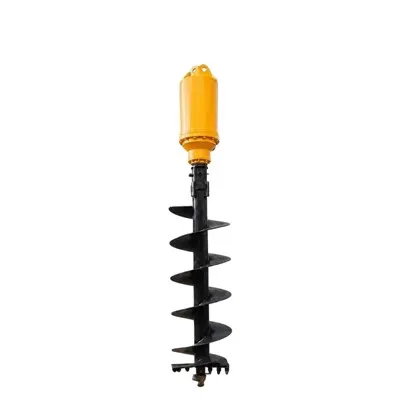
If you’d like to learn more about matching a hydraulic breaker to your carrier, or get a quote for a breaker tailored to your needs, feel free to reach out for a purchasing consultation. We’re here to help you make the most efficient choice for your business.
Excavator Attachment References:
- Construction Equipment Association. Hydraulic Breaker Efficiency Guidelines, 2021.
- Smith, J. Equipment Productivity in Demolition: A Field Study of Hydraulic Breakers. Journal of Construction Machinery, vol. 42, no. 3, 2020, pp. 112-128.
- Miller, T. Reducing Fuel Waste on Construction Sites: The Role of Hydraulic Equipment Matching. International Journal of Construction Management, vol. 19, no. 6, 2019, pp. 456-463.
- National Demolition Association. Hydraulic Breaker Maintenance Best Practices, 2022.
Hope Precision Machinery Co., Ltd.
As one of the most professional hydraulic breaker manufacturers and suppliers in China, we also support customized service. Please feel free to buy high quality hydraulic breaker for sale here from our factory. For more information, contact us now.
Address: No.8 Shenzhen Street, Development Zone, Yantai,Shandong ,China
E-mail: lulu@hope-breaker.com
WebSite: https://www.hopeequip.com/
