If you’re in manufacturing, warehousing, construction, or any industry that moves heavy, weird-shaped, or ultra-delicate stuff daily, you’ve probably heard of “special purpose forklifts” – but I bet you’ve also heard someone mix up terms like “burden carrier” or “specialized material handling equipment” so much it’s hard to keep straight. As a guy who’s been supplying custom, built-for-your-job forklifts for almost 10 years, I get it: nobody wants to waste time guessing what a machine does when you need it to unload a 20-foot steel coil that can slice a standard forklift’s mast, or navigate a cramped food processing plant where dust and fumes would blow up a regular truck. Today, let’s break down exactly what a burden carrier special purpose forklift is, why it’s not just a “fancy forklift,” and how it’s way different from the clunky yellow forklifts you see at Home Depot. Special Purpose Forklift
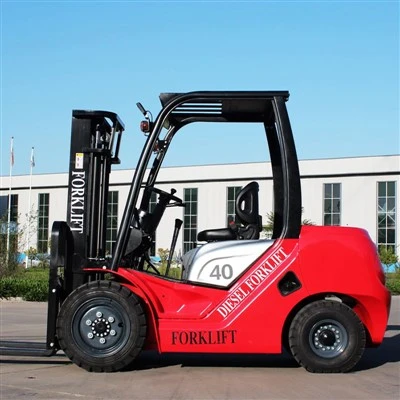
First, let’s kill the confusion right off the bat. A burden carrier special purpose forklift is a purpose-built material handling vehicle designed exclusively to transport “burdens” – that’s industry lingo for loads that regular forklifts can’t handle safely, efficiently, or at all. But here’s the key difference from a standard industrial forklift: these aren’t one-size-fits-all. Every part, from the frame to the forks to the control panel, is tweaked for a specific load, space, or job site constraint. Standard forklifts are jacks-of-all-trades – they can lift pallets and move around a warehouse, but if your load is anything outside 48×40-inch pallets and 5,000 lbs, you’re either forcing a square peg into a round hole, or risking a breakdown, injury, or lost cargo.
Let me give you a real example to make this concrete. Last year, we worked with a steel distributor in Detroit. They were unloading 30,000-lb steel coils that were 6 feet wide, with sharp edges that would gouge standard forklift masts and forks. A standard forklift would’ve bent the mast in half the first time they tried to lift one, or sliced a fork through the coil’s inner core. Our team built them a burden carrier special purpose forklift with a reinforced, low-center-of-gravity frame (so even a 30k load wouldn’t tip when turning on a concrete yard), and custom, curved forks wrapped in high-density rubber that cradled the coil’s inner rim instead of pinching its sharp edge. They had a bunch of old, beat-up standard forklifts that broke down every other week on this exact task – now they run one of these custom burden carriers, and that line of their operation has zero downtime related to material handling.
Another super common use case? Food and pharmaceutical manufacturing. Let’s say you run a bottling plant where you need to move full pallets of soda through a cleanroom, or a biotech lab that handles sensitive vaccine vials. Regular forklifts can have leaking hydraulic fluid, dust buildup on their engines, or exhaust fumes that are totally unacceptable in spaces where cleanliness is non-negotiable. We recently supplied a pharmaceutical client with a burden carrier forklift that’s electric-powered (no exhaust fumes), has a sealed, washable chassis that can be hosed down daily with industrial sanitizer, and has a speed limiter that caps it at 3 mph – because zooming around a cleanroom where even a dropped vial could set back a $100k production batch is a no-go. Standard forklifts can’t handle that – they’re not designed to be sanitized, their hydraulic systems aren’t sealed for food-grade use, and their top speeds are way too fast for crowded, sensitive spaces.
Wait, but what sets a burden carrier apart from other special purpose forklifts, like order pickers or reach trucks? Let’s keep this real – I get that most people in the industry don’t care about the jargon, but knowing the difference saves you a ton of money. Order pickers are made for lifting people up to grab items from high shelves – their whole job is operator access. Reach trucks are for reaching high pallets in narrow aisles, but they’re still built for standard pallets, not weird loads. Burden carrier special purpose forklifts? Their entire design is centered on the load, not the operator or standard infrastructure. That’s the big, defining line. So if your job is lifting a load that doesn’t fit a standard pallet, is too heavy, too sharp, too delicate, or you’re working in a space standard forklifts can’t fit (like a narrow ship hold, or a below-ground mine tunnel), that’s a burden carrier.
Let’s talk about what makes these machines tick, from a tech perspective that doesn’t make you fall asleep. Every burden carrier starts with a load audit – we don’t just guess, we show up to your job site, measure your load, check the space you need to move it through, note any hazards (dust, fumes, slippery floors), and even ask your team if they’re tired of navigating a certain aisle. Then we tweak every component:
- Frames: Standard forklifts have boxy frames built for balance on flat concrete. Burden carriers have custom frames, often with lower center of gravity for heavy loads, or compact frames that fit through 8-foot-wide doorways instead of the 10-foot doorways standard forklifts need.
- Lifting mechanisms: Forks are the biggest variable here. We’ve built forks with built-in scales for clients that need to track exact load weights, forks that rotate 180 degrees for loading coils onto horizontal racks, and even forks with soft rubber padding for moving delicate glass panes. Hydraulic systems are often sealed or upgraded to handle extreme temperatures (think cold storage warehouses where temperatures drop to -20°F – standard hydraulics get too thick to lift anything there).
- Power sources: Most standard forklifts are gas or diesel, which is fine for open yards. But burden carriers for enclosed spaces use electric or even hydrogen fuel cells – zero exhaust, quieter operation, and less heat, which is perfect for warehouses with temperature-sensitive goods. For mine sites, we even built a burden carrier that runs on compressed air, so no spark risk from electrical systems.
I know what you’re thinking: “This sounds like it costs a fortune.” Let’s be clear – a standard forklift runs $20k-$50k, while a custom burden carrier runs $60k-$150k. But here’s the catch: that upfront cost pays for itself. The Detroit steel distributor I mentioned earlier? They spent $120k on their custom burden carrier, but before that, they were spending $80k a year repairing standard forklifts that they were forcing to lift loads they weren’t built for. Plus, downtime for that line was 12 days a year – now it’s zero. That’s a no-brainer. Another client: a local bakery that had to move 500-lb steel racks of dough across a tight, oil-stained kitchen. They were using a standard pallet jack that tipped every month, spilling dough and costing them thousands in lost product. A $75k burden carrier fixed that – no more spills, no more injuries, and they’ve had it running for 3 years with zero major repairs.
Now, let’s bust a couple of myths I hear all the time from people who’ve never needed one. Myth #1: “I can just modify a standard forklift to do this job.” Sure, you can weld a custom fork on, but that’s a quick fix that’ll fail eventually. Standard forklifts are not engineered for non-standard loads. Welding a heavy fork to a standard mast will warp the mast, throw off the center of gravity, and make it way more likely to tip. We’ve seen clients who tried that – one broke a mast, totaled the forklift, and almost hurt an operator. Don’t cut corners here. Myth #2: “These machines are only for big companies.” No way. We’ve supplied burden carriers to small machine shops with 5 employees, a landscaping company moving large tree roots, and even a local bookstore that moves oversized hardcover book shipments in cramped aisles. It’s all about matching the machine to your specific job, not the size of your business.
As a special purpose forklift supplier, the reason I love working on these projects is that it’s not one-size-fits-all. Every client’s problem is different, so every burden carrier we build is different. Last month, we built a tiny burden carrier for a historic theater company that needs to move 1,000-lb stage props (think 10-foot-tall wooden sets) through a 6-foot-wide back hallway that standard forklifts can’t fit. They were using manual dollies that hurt their staff’s backs – now they have a tiny, electric burden carrier that fits down that hallway, lifts the props safely, and even has a control panel that’s small enough for their part-time stage manager to operate. That’s the kind of stuff that makes this job worth it – not just selling a machine, but solving a real problem.
If you’re reading this and nodding along because you’re dealing with loads that break your current equipment, or job sites where standard forklifts can’t even fit, that’s exactly what burden carrier special purpose forklifts are for. You don’t have to settle for a machine that’s not built for your work, and you definitely don’t have to risk safety or downtime just because you can’t find “a regular forklift that works.”
So, if you’re tired of repairing beat-up standard forklifts, dealing with downtime, or struggling to move loads that don’t fit the norm, reach out to us to chat. We’ll come out, check out your site, walk through your load challenges, and help you figure out if a custom burden carrier special purpose forklift is the right move for you. No pressure, no sales pitch that feels like a used car deal – just straight talk about solving your material handling problems.
Warehouse Forklift REFERENCES
- Material Handling Industry of America. Specialized Lift Truck Applications: The Definitive Guide to Custom Material Handling Equipment. 2021.
- Occupational Safety and Health Administration. Best Practices for Material Handling Equipment Safety. U.S. Department of Labor, 2022.
- International Society of Automation. Custom Industrial Equipment Design Standards for Load-Specific Material Handling. 2020.
Qingdao Dawnshine Heavy Industry Co., Ltd.
As one of the most professional special purpose forklift manufacturers and suppliers in China, we have world-leading production equipment and strong manufacturing capabilities. Welcome to wholesale discount special purpose forklift in stock here and get quotation from our factory. For price consultation, contact us.
Address: South Side of Qiwang Road, Yueshan Village, Naoshan Economic Development Zone, Qingzhou City, Shandong Province, China
E-mail: laven.wang@china-dawnshine.com
WebSite: https://www.ds-forklift.com/
