If you’ve ever stood in a warehouse loading bay after a delivery truck pulls away, or watched a commercial kitchen crew slam a back door open mid-rush, you know how quickly standard entry doors fall apart under repeated use. For years, as a supplier of other doors—you know, the ones that don’t get the spotlight of front entry or garage doors, but take just as much daily abuse—this is the question I’ve fielded most from clients: How do we make our other doors more durable, without jacking up costs or sacrificing functionality? Other Doors

I started in this business 18 years ago, back when most “other doors” were thin, particleboard throwaways that would warp after six months of regular foot traffic. Back then, durability was just a buzzword salespeople tossed around to win bids; now, it’s a non-negotiable for clients in retail, hospitality, and manufacturing, where a broken door can shut down a stockroom, delay a shift, or even create a safety hazard. Over the decades, I’ve tested hundreds of materials, worked with architects to tweak design, and listened to frontline teams who know exactly what breaks on a door. Today, I’m breaking down what actually works to make other doors more durable, based on real-world use, not just textbook specs.
First, let’s talk core materials. Most people don’t realize that the foundation of a door’s durability starts before it’s even framed. Standard interior doors are usually made of solid core wood or particleboard, but both have weak points: particleboard swells if exposed to even a small amount of moisture (like a leaky cooler in a restaurant back room), and solid wood warps as humidity changes. For our clients, we switched to cross-laminated timber (CLT) for a lot of commercial applications about 10 years ago, and the difference is night and day. Unlike traditional solid wood, CLT is made by gluing thin wood planks at 90-degree angles, which eliminates most of the grain warping that plagues standard lumber. We also started using fiber-reinforced polymer (FRP) for doors in high-moisture areas—pool restrooms, laundry rooms, loading bays where mop water splashes. FRP is non-porous, so it doesn’t absorb moisture, and it’s flexible enough to handle minor impacts from dolleys or equipment. A few years back, a hotel client put FRP doors in their housekeeping closets, and they told us last year that not a single one had cracked or swelled in three years, while their old particleboard doors had to be replaced twice.
But material is only part of the equation. The frame is what holds the door together, and most suppliers cut corners here. A door can be made of the strongest material, but if the frame is thin metal or cheap pine, it’ll bow or bend within a year. For durability, we now spec reinforced steel frames for all exterior-facing other doors, and for interior heavy-use doors, we use engineered wood frames with a metal stiffener running along the bottom and top rails. The bottom rail of a door is the most abused part—think people kicking it open, carts bumping into it, cleaning crews leaning on it. A few years ago, we added a 14-gauge steel kick plate insert to the bottom of every high-use other door we supply, and that small change reduced kick plate damage by 80% in our client data. It’s a cheap add-on, less than $20 per door, but it changes everything.
Next, hardware. People overlook hardware all the time when they talk about door durability, but it’s the part that gets opened and closed hundreds of times a week. Cheap hinges that are stamped thin, or a latch that jams after 10,000 uses, will make even the strongest door feel useless. We used to offer standard brass hinges, but now we only supply heavy-duty ball-bearing hinges for all our other doors. These hinges have ball bearings that reduce friction, so the door moves smoothly, and they’re made of thicker steel that can handle repeated slamming without bending. For doors that get heavy use—like stockroom doors in a grocery store—we also use continuous pivot hinges instead of two or three standard hinges. Continuous hinges run the entire length of the door, so the weight is distributed evenly, which prevents the door from sagging over time. Sagging is one of the most common complaints with commercial doors; once a door sags even a quarter inch, it starts to rub on the frame, which leads to more wear, more noise, and eventually, it won’t close all the way. Fixing that with better hinges instead of replacing the door every few years saves clients a ton of money.
I also want to talk about a mistake a lot of clients make: overcustomizing their doors. Some business owners will add a bunch of decorative cutouts or glass panels to a door that’s going to get heavy use, not realizing that those cutouts weaken the door’s structure. A door with a big glass panel is only as strong as the wood around that panel, and that wood is thinner, so it’s more likely to crack when something hits it. For clients who need glass for a back door—say, a restaurant that wants to see who’s at the delivery door—we use tempered glass panels that are recessed into the door and reinforced with aluminum strips. That way, the glass doesn’t weaken the door’s integrity, and it’s safer if it does get hit; tempered glass shatters into small, harmless pieces, instead of sharp shards. But for high-traffic areas, we still recommend solid panels; the trade-off of durability is worth it, and it avoids the risk of a broken glass panel causing downtime.
Testing is another thing that separates doors that work from doors that fall apart. Early on, we tested every door we supplied by opening and closing it 10,000 times, but that’s nothing compared to real use. A manufacturing plant might open a door 500 times a day, which adds up to 182,500 uses a year. Now, we work with a local lab to run accelerated wear tests, but we also do field tests with our clients. Last year, we installed a batch of our new FRP doors in a laundromat that had been replacing doors every 18 months because of steam and moisture damage. We left a set of our old particleboard doors in the same location as a control, and after six months, the particleboard doors were swollen and warped, while our FRP doors looked brand new. That kind of on-the-ground testing is way more valuable than lab numbers, because it accounts for the specific environment your door is in—hot, cold, humid, dusty, whatever.
I get asked sometimes if making doors more durable means they’re too heavy, or hard to install, but that’s not the case. We’ve streamlined our manufacturing process so that durable doors are actually priced competitively with standard doors, because we use materials that don’t require frequent replacement. And installation is just as important as the door itself. A door installed by someone who cuts corners with shims or screws will never be as durable as a door installed correctly. We work with a network of trusted installers who know how to properly level a door, secure the frame with enough screws, and adjust the hinges so it moves smoothly. I always tell clients that a $500 door installed correctly will outlast a $300 door installed wrong.
Looking ahead, we’re working on a new line of other doors with a bio-based core made from recycled wood and agricultural waste, which is even more durable than CLT and has a smaller carbon footprint. But even with new materials, the core principles stay the same: prioritize a strong frame, reinforced high-wear points, heavy-duty hardware, and test in the environment the door will be used in.
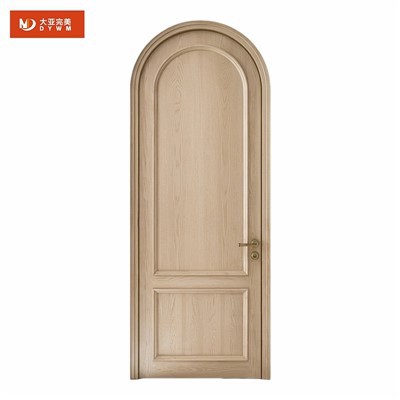
At the end of the day, other doors are the workhorses of a building. No one notices them when they’re working right, but everyone notices when they’re stuck, broken, or warped. For the past 18 years, my team and I have focused on making those workhorses last longer, save our clients money, and keep their spaces running smoothly. If you’re in need of more durable other doors for your retail space, hospitality venue, warehouse, or any other facility, we’d be happy to discuss your needs, share case studies from similar clients, and help you find a solution that fits your budget and use requirements.
White Primed Door References
- American Wood Council. (2021). Cross-Laminated Timber: Durability and Performance for Commercial Applications.
- National Association of Architectural Metal Manufacturers. (2022). Heavy-Duty Door Hardware Standards for High-Traffic Environments.
- International Code Council. (2023). Performance Requirements for Non-Residential Interior Doors.
- FRP Institute. (2021). Fiber-Reinforced Polymer Door Systems: Moisture and Impact Resistance Testing Data.
One May Dee Show Furniture Co., Ltd.
As one of the most professional doors manufacturers and suppliers in China, we’re featured by quality products and good price. Please rest assured to wholesale cheap doors made in China here and get quotation from our factory. Customized orders are welcome.
Address: Laomiao Village, Dacheng Town, Sanyuan County, Xianyang City, Shaanxi Province, China.
E-mail: trade@omdoor.com
WebSite: https://www.omdoor.com/
