If you’re like me, you probably walked into your bathroom last week, stared at that plain, functional mirror on the wall, and thought it does the job—but it feels nothing like the rest of your styled home. For years, I’ve specialized in supplying standard bathroom mirrors for homes that want balance: they don’t need over-the-top, luxury fixtures, but they also don’t want a space that feels like an afterthought. That’s why I’ve spent years testing small, intentional accessory swaps that turn a basic mirror from a utilitarian tool into a small, joyful anchor of your bathroom. I’m not a interior designer with a six-figure client list, just a supplier who’s listened to hundreds of homeowners say, “I want my mirror to match my bathroom, not fight it.” If that sounds like you, let’s break down how to style a standard bathroom mirror the right way—no fancy tools required. Standard Bathroom Mirrors
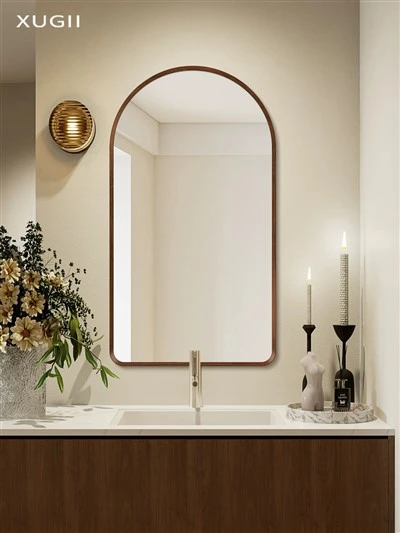
First, let’s get one thing straight: a standard bathroom mirror isn’t a blank slate. It’s a surface with a specific job, and your accessories need to work with that, not against it. The biggest mistake I see people make is overcrowding the mirror’s edge with too many things, or picking accessories that clash with the mirror’s size, shape, or even the way light bounces off it. Let’s start with the basics: choosing the right “anchor” accessory, the one that sits closest to the mirror itself, because that’s the first thing your eye lands on when you look at it.
For standard framed mirrors (the most common type my team supplies), the anchor is almost always a set of wall sconces. I’ve watched homeowners swap out a single, harsh overhead light with two small wall sconces on either side of their mirror, and the difference is dramatic. Why? Bathroom lighting is make-or-break: a single overhead bulb creates harsh shadows under your eyes, especially when you’re shaving or applying makeup. Sconces placed 60 inches from the floor (the average eye level for adults) and 36 inches apart on either side of the mirror eliminate those shadows. Now, when you style your mirror, you don’t have to deal with that unflattering glare anymore. The key here is to pick sconces that match the mirror’s frame. If your standard mirror has a simple black metal frame, go for black metal sconces; if it’s a warm wood frame, pick a matte brass or oil-rubbed bronze that complements, not matches, the wood. I always tell customers to test this: hold a small sconce sample next to your mirror frame—if the two don’t feel like they’re from different rooms, that’s a good match.
Wait, what if your standard mirror is frameless? Frameless mirrors are super popular in modern bathrooms because they feel sleek, but styling them can feel trickier. For frameless mirrors, skip the heavy sconces and go for a pair of small, circular LED lights that stick to the mirror’s surface—they’re low-profile, don’t disrupt the mirror’s clean line, and still offer even lighting. I’ve seen frameless mirror owners pair these LED lights with thin, adhesive wall hooks on either side for towels, which adds function without cluttering the space.
Now, let’s talk about items that actually sit on the mirror’s surface—because some people swear by this, and others think it’s a big no. I’m in the middle on this: small, lightweight items work, but anything heavy or bulky? Skip it. For example, a small, round tray for your everyday toiletries (face wash, a tiny jar of moisturizer, a toothbrush holder) is perfect. Why? It corrals clutter so it doesn’t look messy, and it sits on the mirror only if you have enough space—like a standard 24×36 inch mirror, which is the most popular size my team supplies. A tray on that size mirror won’t block your view, and it adds a little decorative touch. The key is to pick a tray that’s smaller than a quarter of the mirror’s total surface. A 8-inch round tray fits perfectly on a 24-inch wide mirror; any bigger and it starts to look overwhelming. I recommend natural materials for trays: bamboo, marble, or even ceramic with a subtle texture. Avoid shiny, overly reflective trays because they’ll add extra glare to your mirror, which can be distracting when you’re using it.
What about mirrors with medicine cabinets behind them? A lot of standard bathroom mirrors are actually medicine cabinets, so the door becomes part of the mirror’s surface. If that’s yours, stick to items that fit on the top edge of the cabinet, not the reflective surface itself. A small potted succulent on top of the medicine cabinet, for example, adds a pop of green without blocking any of the reflective area. Just make sure the plant is small enough that it doesn’t stick out into your line of sight when you’re using the mirror. I’ve had customers try a fern before, and it was too big—they kept getting fronds in their face, so it’s important to test scale here.
Next, let’s tackle the space around the mirror, because styling isn’t just about the mirror itself—it’s the area immediately adjacent to it that ties the whole look together. A common trick I’ve learned over years of supplying standard bathroom mirrors is to use a “visual balance” rule: the space to the left of the mirror should match the space to the right, in both height and weight. If you hang a towel ring 18 inches to the left of the mirror, hang a small shelf or a single plant 18 inches to the right. Don’t make one side have a big, heavy basket and the other have nothing—this makes the mirror feel lopsided, even if you don’t realize why at first.
Another great accessory for the area around a standard mirror is a framed art piece or a decorative tile. Wait, but what kind? Bathroom art has to be waterproof, obviously, because of steam. So skip regular canvas art—go for a small, framed piece with glass (or even a print on waterproof vinyl) that’s hung 10 to 15 inches above the top of the mirror. That’s a sweet spot: it’s high enough that it doesn’t interfere with your view, but low enough that it feels connected to the mirror, not floating above it. For standard mirrors that are 30 inches tall, a 12×12 inch decorative tile works perfectly above them. If you prefer something more textured, a woven wall hanging (again, waterproof, or treated to resist moisture) is a soft touch that adds warmth without feeling formal.
Let’s talk about small, practical accessories that also add style, because I know a lot of my customers don’t want to sacrifice function for looks. One of my favorites is a magnetic soap dispenser or a magnetic storage cup. These stick directly to the mirror, so they don’t take up counter space, and they come in all sorts of finishes to match your mirror’s frame. I recently supplied a customer with a set of black magnetic dispensers for their standard black-framed mirror, and they told me it was the easiest swap they’d made—no drilling, no rearranging their counter, just a little extra organization that looked intentional. Another great one is a set of wall hooks for robes or hand towels, but again, place them symmetrically. If your mirror is on a blank wall, one hook on each side is better than two on one side.
Now, let’s talk about what to avoid, because I’ve seen so many people make these mistakes that end up making their mirror feel cluttered instead of styled. First, don’t hang more than one decorative item above the mirror. I know, it’s tempting to add art and a shelf and a light, but too many things create visual noise. Stick to one statement piece above, and one small item on the mirror (if you do that), and that’s it. Second, don’t use heavy accessories on the mirror surface. I had a customer once try to put a full-size candle on their mirror, and it was too heavy—over time, the adhesive started to pull the mirror’s edge away from the wall, which is a safety hazard. Light items only, please. Third, don’t ignore the mirror’s shape. A standard rectangular mirror works with almost any style, but if you have a round standard mirror, your accessories should follow that soft line. For a round mirror, skip the sharp, angular sconces—go for curved or oval fixtures that match the mirror’s shape.
Wait, let’s get specific with a real example. Last month, a customer of mine ordered a 24×36 inch standard white-framed bathroom mirror from our line. She wanted a spa-like look, so here’s what we recommended: two matte brass wall sconces, placed 60 inches from the floor, 36 inches apart on either side of the mirror. A 8-inch marble tray on the center of the mirror with a glass toothbrush holder and a small jar of Epsom salts. On either side of the mirror, she hung a small woven basket for loofahs (18 inches from the mirror edge) and a small pothos plant in a white ceramic pot on the other side. Above the mirror, she hung a 12×12 inch waterproof print of a palm leaf. She sent me a photo later, and it looked amazing—no clutter, balanced, functional, and the mirror felt like a purposeful part of the bathroom, not an afterthought. That’s the sweet spot we’re going for.
Another example for a modern bathroom: a frameless 20×28 inch standard mirror. We recommended two circular LED stick-on lights on either side of the mirror (instead of heavy sconces), a thin adhesive towel hook on each side for hand towels, and a small, circular magnetic storage cup for bobby pins on the mirror surface. Above, a small waterproof metal sign that says “Wash Away the Day” hung 12 inches up. Clean, sleek, no extra stuff, and it works perfectly.
I want to stress that you don’t have to spend a lot of money to style a standard bathroom mirror. A lot of the accessories I’m talking about are budget-friendly: a $10 marble tray, $15 wall sconces, a $5 succulent. The mirror itself is the star—you just need to add small, intentional touches to highlight it. That’s why I love working with standard mirrors: they’re versatile enough to fit every style, from farmhouse to modern to spa-like, and the styling is all about making small choices that feel personal to you.

Now, if you’re ready to pick a standard bathroom mirror and start styling it, I’m here to help. My team has worked with thousands of homeowners and small contractors to find the right mirror for every bathroom, and we can walk you through accessory suggestions tailored to your mirror size, frame, and bathroom style. Whether you’re renovating a full bathroom or just sprucing up a guest bathroom, we can help you find a mirror that’s the perfect base for your styling. Don’t hesitate to reach out to our team to discuss your project, ask questions about mirror options, or get personalized styling tips that fit your space.
LED Bathroom Mirrors References
- International Residential Code for One- and Two-Family Dwellings, 2021 Edition, Chapter 21: Plumbing and Mechanical Systems, Section 2109.4 (Bathroom Lighting and Ventilation)
- National Kitchen & Bath Association (NKBA), 2023 Bath Design Trends Report, Section on Small-Space Styling
- Journal of Interior Design, Vol. 45, No. 2, 2020: “Functional Aesthetics: Balancing Utility and Style in Bathroom Fixtures”
- U.S. Consumer Product Safety Commission (CPSC), 2022 Report on Bathroom Mirror Safety, Section on Surface-Mounted Accessories
Taizhou Zhiyuan Electronic Technology Co., Ltd.
As one of the most professional standard bathroom mirrors manufacturers and suppliers in China, we’re featured by quality products and good service. Please rest assured to wholesale customized standard bathroom mirrors from our factory. Welcome to contact us for free sample.
Address: Duqiao Town, Linhai City, Taizhou City, Zhejiang Province
E-mail: hsuming@zyledmirror.com.cn
WebSite: https://www.zyledmirror.com/
