If you’ve ever felt a cold drink turn warm after leaving it on a table for too long, or waited for a pot of water to boil while cooking, you’ve experienced heat transfer at work. For industrial operations—where consistent, efficient heat exchange isn’t just a convenience, but a non-negotiable part of daily productivity—this same principle is scaled up, refined, and integrated into equipment designed for heavy-duty use: shell and tube heat exchangers. As a supplier with decades of experience building and refining these units, I get asked all the time why shell and tube exchangers are still the go-to across so many sectors, instead of newer, more compact alternatives. The short answer is simple: they’re versatile, reliable, and adaptable to nearly every industrial condition you can throw at them, with applications tailored to meet specific process needs. Shell Heat Exchanger

Let’s start with the most ubiquitous application, one that’s hard to avoid if you work in power generation. Nearly every coal-fired, natural gas, and biomass power plant relies on shell and tube heat exchangers to turn water into high-pressure steam that drives turbines, which in turn generate electricity. The core system here is the boiler feedwater heater: one shell and tube unit takes low-pressure, unprocessed water from a storage tank and uses exhaust steam from the turbine to preheat the water before it enters the main boiler. Preheating feedwater cuts down on the energy needed to heat water to boiling, reducing fuel use by up to 15%—a massive savings for power plants that run 24/7. Another critical piece in this sector is the condenser, a shell and tube exchanger that takes the steam exhausted from the turbine and cools it back into liquid water, so it can be recirculated through the boiler. Here, water (usually from a cooling tower or a nearby river) flows through the tubes, and the low-pressure steam fills the shell side, condensing into liquid as it loses heat. Without this exchanger, steam would remain gaseous, unable to complete the cycle, and power plants would grind to a halt. I’ve supplied dozens of these condensers to power plants across the Midwest over the years, and the biggest takeaway I’ve learned is that reliability matters most here: a condenser failure can cost a plant tens of thousands of dollars per day in lost revenue, so operators prioritize exchangers built to withstand high pressure and corrosive water.
Next up, oil and gas refining—an industry where even small inefficiencies add up to huge costs. Refineries process crude oil into gasoline, diesel, jet fuel, and a long list of petrochemicals, and shell and tube exchangers are the backbone of the distillation process. Crude oil is a mixture of hydrocarbons with different boiling points, so refineries heat the oil to separate these components in a distillation column. But heating crude oil to its boiling point takes a lot of energy, and exchangers help reuse that heat instead of wasting it. For example, a preheat shell and tube unit will take hot, already-separated hydrocarbons (like heavy gas oil from the bottom of the distillation column) and transfer their heat to cold incoming crude oil, raising its temperature before it even enters the furnace. This reduces the furnace’s fuel load by as much as 30%, a game-changer for refineries that process tens of thousands of barrels of crude daily. Another key application here is the heat exchanger used in hydroprocessing, a refining process that adds hydrogen to crude to remove impurities like sulfur. These exchangers operate at extremely high pressures (up to 2,000 psi) and high temperatures, so we build them with alloy steel tubes that can withstand corrosion from hydrogen and sulfur compounds. I’ve worked with refining clients who come back to us for repeat orders because our exchangers are designed to handle the harsh, variable conditions of hydroprocessing without leaking or failing mid-run.
Moving to chemical processing, where every product is custom and every process requires precise temperature control. Chemical plants make everything from fertilizers to plastics to pharmaceuticals, and shell and tube exchangers are essential for both heating and cooling reactions. Take the production of urea, a common fertilizer: the reaction that creates urea from ammonia and carbon dioxide releases a lot of heat, so a shell and tube exchanger is used to cool the reaction mixture, preventing it from overheating and degrading. On the flip side, many polymerization reactions (used to make plastics like polyethylene) require precise heating to trigger the reaction, and exchangers are used to maintain a consistent temperature throughout the reactor. For pharmaceutical manufacturers, shell and tube exchangers have to meet strict sanitary standards, since any cross-contamination between process fluids can ruin batches of drugs. We build exchangers for pharma clients with polished stainless steel tubes and gaskets that are compatible with food and drug regulations, and we design them to be easily cleaned between batches—a requirement that’s non-negotiable for this sector.
Food and beverage processing is another area where reliability and hygiene are top priorities, and shell and tube exchangers fit the bill perfectly. Think about the pasteurization of milk: before milk is bottled and sold, it’s heated to a specific temperature (161°F for 15 seconds) to kill harmful bacteria, then quickly cooled to prevent spoilage. A shell and tube heat exchanger is used here to capture the heat from already pasteurized milk and transfer it to raw, cold incoming milk, cutting down on the energy needed to heat the milk to pasteurization temperature. This not only saves energy, but also reduces the time milk spends at high temperatures, improving its shelf life. Beverage companies also use shell and tube exchangers to cool beer after fermentation, to adjust the temperature of soft drinks during bottling, and to heat water for cleaning equipment between production runs. For these applications, we use food-grade stainless steel tubes and shell linings that won’t react with acidic or sugary fluids, and we design the units to be easy to disassemble and clean—something that’s critical for food safety.
Heating, ventilation, and air conditioning (HVAC) for large commercial buildings and industrial facilities might not be the first thing you think of when it comes to heat exchangers, but shell and tube units play a big role here. Large office towers, hospitals, and factories need centralized cooling systems that use water as a refrigerant. The chiller system uses a shell and tube evaporator, where cold liquid refrigerant flows inside the tubes and absorbs heat from the surrounding water, cooling the water before it’s circulated through the building’s vents. Another exchanger, the condenser, takes the hot refrigerant vapor from the compressor and uses cooling water (from a tower or a municipal supply) to condense it back into a liquid, releasing heat outside the building. For large facilities with high cooling loads, shell and tube exchangers are more efficient than smaller plate exchangers, and they can handle higher flow rates without pressure drops that would reduce system performance. I’ve supplied exchangers to hospital HVAC systems, where consistent cooling is life-saving—even a short outage can disrupt patient care, so operators prioritize exchangers with low maintenance requirements.
Finally, wastewater treatment plants use shell and tube exchangers to manage the temperature of treatment processes. Many biological treatment processes (which use bacteria to break down organic matter in wastewater) work best at a specific temperature, usually between 68°F and 95°F. Exchangers are used to heat wastewater in cold climates, where temperatures can drop below freezing, and to cool it in hot climates, where wastewater can get too warm for the bacteria to function. Some wastewater plants also use exchangers to capture heat from the effluent (the treated water) to preheat incoming raw wastewater, reducing the energy needed for heating. We’ve built smaller, compact shell and tube units for municipal wastewater plants, and larger, heavy-duty units for industrial wastewater treatment at refineries and chemical plants, where the effluent can contain corrosive chemicals that require durable, corrosion-resistant materials.
What’s interesting about all these applications is that shell and tube exchangers are so adaptable because of their simple design: they consist of a large cylindrical shell, with a bundle of tubes running through it, and two fluid streams (one inside the tubes, one inside the shell) transfer heat through the tube walls without mixing. This design can be modified for nearly any condition: we can use different materials (stainless steel, carbon steel, alloy steel, even titanium for highly corrosive fluids), adjust the tube and shell size to handle high or low pressure, and add baffles to the shell to improve heat transfer by directing the shell-side fluid across the tube bundle. Unlike newer compact heat exchangers, which have limits on pressure, temperature, and fluid compatibility, shell and tube units can be customized to fit almost any industrial process requirement.
I’ve been working as a shell heat exchanger supplier for over two decades, and one thing I’ve learned is that no two applications are exactly alike. A unit for a nuclear power plant has different requirements than one for a craft brewery, and both are very different from a unit for a petrochemical refinery. That’s why we don’t offer a one-size-fits-all product—we work closely with each client to understand their specific process needs, operating conditions, and performance goals, then design a custom exchanger that fits perfectly. Whether you’re looking to improve energy efficiency in your refining process, ensure consistent temperature control for your chemical reactions, or keep your power plant running reliably, our team has the experience and expertise to deliver a shell and tube heat exchanger that meets your needs.
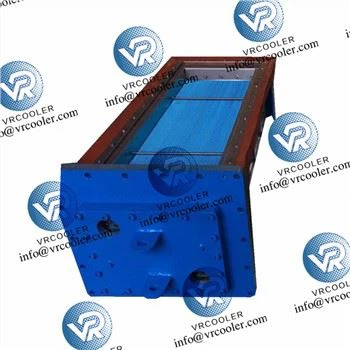
If you’re considering upgrading your current heat exchanger system, need a replacement for a failed unit, or want to explore custom solutions for your specific industrial application, we’re here to help. Reach out to our team to discuss your requirements and start a conversation about how our shell and tube exchangers can improve your process efficiency and reduce operational costs.
Cummins Compressor Cooler References
- Kakac, S., & Liu, H. (2002). Heat Exchangers: Selection, Rating, and Thermal Design. CRC Press.
- Kern, D. Q. (1950). Process Heat Transfer. McGraw-Hill Book Company.
- Shah, R. K., & Sekulic, D. P. (2003). Fundamentals of Heat Exchanger Design. John Wiley & Sons.
- Smith, R. (2005). Chemical Process Design and Integration. John Wiley & Sons.
- Department of Energy. (2019). Industrial Heat Exchange Best Practices Guide. U.S. Department of Energy, Office of Energy Efficiency and Renewable Energy.
Changzhou Vrcooler Refrigeration Co., Ltd.
Changzhou Vrcooler Refrigeration Co., Ltd. is one of the most professional shell heat exchanger manufacturers and suppliers in China, specialized in providing high quality aftermarket service. Please rest assured to buy high-grade shell heat exchanger for sale here from our factory. For price consultation, contact us.
Address: No. 18-69,Changwu Zhong Road, Wujin district, Changzhou, Jiangsu
E-mail: info@vrcooler.com
WebSite: https://www.vrcooler.com/
