Hey everyone, Slurry Pump
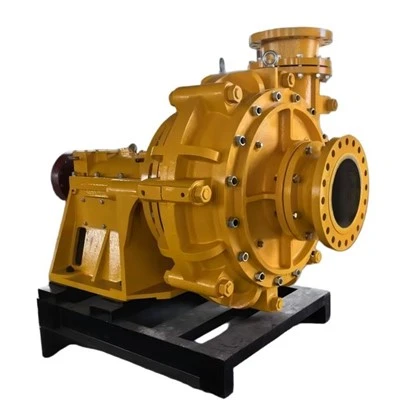
If you’ve ever stopped to watch a mining operation, a wastewater treatment plant, or a construction site moving thick, gritty slurry (you know, that messy mix of solids and liquid that clogs less tough pumps), you’ve probably wondered how the pumps keep going—even when the stuff they’re shoving around is like wet sand or heavy sludge. Today, I want to talk about one of the most underrated parts of any slurry pump: the shaft. I’m part of a team that supplies these pumps, and I hear from customers all the time that they either overlook the shaft or don’t get what it actually does beyond “turns the impeller.” Spoiler: that’s just the tip of the iceberg.
First off, let’s get clear on what a slurry pump is, for anyone who might not be super deep in the industry. Unlike a regular clear-water pump that’s made for smooth, thin liquids, slurry pumps are built to handle abrasive, high-solid-content stuff. They’re used in mining to move coal or ore slurry, in dredging to suck up mud from riverbeds, in industrial processing to move chemical sludge, even in municipal wastewater to get past all the gunk that would jam a standard pump. And every one of these pumps relies on that rod-like shaft I mentioned earlier to function.
So what’s the real purpose of that shaft? Let’s break it down like we’re troubleshooting a common problem. First, it transmits power. That sounds simple, right? You hook the pump up to an electric motor or engine, and the shaft connects the motor’s drive to the impeller—the spinning blade that moves the slurry. But here’s the thing: with regular pumps, the power transmission is straightforward because the load is low and smooth. Slurry pumps? They’re dealing with 30, 40, even 50% solids by volume, so the impeller is fighting constant abrasion and torque that would snap a standard shaft. That means our shafts aren’t just long metal rods—they’re engineered to handle both rotational force and the side load that comes from pushing thick, heavy material. If the shaft was too thin or made of cheap steel, it’d bend, wobble, or break within days, not years. That’s a big reason customers come to us instead of buying off-the-shelf parts: we build shafts that match the exact torque and load their application needs, not a one-size-fits-all.
Next, the shaft positions the impeller. If you’ve ever worked on a bike, you know that the wheel has to be perfectly centered to spin smoothly, no rubbing against the frame. Same with a slurry pump impeller. The gap between the impeller and the pump casing (the outer shell that holds the liquid) is tiny—usually just a few millimeters. If the shaft shifts even a little bit, that impeller hits the casing, causes friction, and wears out both parts fast. For slurry pumps, that wear is way worse because the solids act like sandpaper. So the shaft has to keep the impeller aligned, even when the pump is running for 12+ hour shifts, vibrating from the uneven load of slurry, or heating up from friction. We see this mistake all the time: customers swap in a random shaft from a generic pump, and suddenly their impeller is rubbing, they’re losing 20% of their flow, and they’re replacing parts every month instead of every 6 months. The right shaft keeps that gap consistent, which boosts efficiency and cuts downtime—something that’s make-or-break for operations that can’t afford to shut down.
Wait, there’s another job people don’t talk about: the shaft acts as a seal support. Slurry pumps don’t just have a simple seal like a water pump. They have mechanical seals or gland packing that keeps the slurry from leaking out of the pump—you don’t want wet ore all over your factory floor, or sludge seeping into clean water. That seal sits right on the shaft. So if the shaft has any scratches, burrs, or uneven spots, the seal can’t form a tight barrier. Leaks start, slurry gets into the seal, and it fails in days. We machine our shafts to a mirror-smooth finish, too—another detail that off-the-shelf shafts skip. I had a customer last year who was dealing with constant seal leaks, spending $1,500 a month on replacement seals. Switched to our custom-machined shaft, and his seal life tripled. That’s the kind of win people miss when they don’t understand the shaft’s role.
Now, let’s be real—no shaft lasts forever, especially in slurry applications. Abrasion from solids hits the shaft’s exposed parts too, right? The part of the shaft that sticks out of the pump (the part connected to the motor) is usually protected, but the part that’s inside the pump housing is exposed to slurry. That’s why many of our shafts have a hard chrome plating or a ceramic coating on the areas that come into contact with the slurry. It’s not just about making the shaft tough—it’s about extending its service life so customers don’t have to do a full pump replacement when the shaft wears out. I always tell new customers: don’t buy a cheap pump just to save a few bucks. The shaft is the backbone, and if that backbone fails, your whole operation stops.
I get it, when you’re out on a jobsite, you’re focused on flow rates, pump size, and getting the slurry from point A to point B as fast as possible. The shaft is hidden, so it’s easy to treat like an afterthought. But let’s put this in perspective: a mining operation that runs 24/7 loses about $50,000 a day if their pump goes down. If a wrong shaft leads to a pump failure every 2 weeks instead of every 3 months, that’s $300,000 in lost revenue a year—just from skipping the right shaft. That’s why we spend so much time working with customers to match the shaft to their exact slurry type, flow rate, and operating conditions. We don’t just sell a pump; we make sure every internal part, including the shaft, is set up to perform.
Common mistakes I see: first, using a shaft designed for clear-water pumps. Those are made for low torque, low side load, no abrasion. Slurry? They’re way harsher. Second, ignoring shaft alignment during installation. Even the best shaft will fail if it’s not lined up straight with the motor. Third, skipping regular inspections. A tiny scratch on the shaft might not seem like a big deal, but after a month of spinning, that scratch can turn into a crack that leads to a breakdown. We always include a quick shaft inspection checklist with every pump we supply—something that takes 10 minutes but prevents a whole lot of headaches.
Let me give you a quick example. Last quarter, we worked with a dredging company that was using a pump they bought from a big box industrial supplier. Their shaft bent within 3 weeks, the impeller wore out, and they had to pause their dredging project for 10 days. That cost them almost $100,000 in fines and delayed project fees. They switched to our slurry pump, and we customized the shaft to handle the high side load from their riverbed slurry—high in clay and small rocks. Now, their shaft lasts 6 months on average, their downtime is down 80%, and they’re back on schedule. That’s the difference between a shaft that’s an afterthought and one that’s a core part of the pump’s performance.
So if you’re running an operation that uses slurry pumps, here’s the takeaway: the purpose of the shaft isn’t just to turn the impeller. It’s the power transmission hub, the alignment keeper, the seal support, and the structural backbone that keeps your pump running through the toughest conditions. Skimping on the shaft isn’t a small cost cut—it’s a gamble with your operation’s uptime and bottom line.

If you’re tired of dealing with constant pump failures, worn shafts, and lost downtime, reach out to us. We don’t just sell standard pumps; we build custom solutions, including shafts tailored to your specific slurry, flow, and workload. Shoot us a message, and we can walk through your application, answer any questions you have about shafts, and find the setup that works for you.
Sand Pump References:
- "Slurry Pump Design and Application Handbook," Mining Equipment Manufacturers Association, 2021.
- "Mechanical Sealing for Abrasive Slurry Pumps," Journal of Industrial Pump Technology, Vol. 18, No. 3, 2020.
- "Shaft Alignment Best Practices for Heavy Industrial Pumps," National Fluid Power Association, 2022.
- "Abrasion Resistance of Pump Shaft Materials," Wear Science International, 2019.
Shijiazhuang Ruite Pump Co., Ltd.
As one of the most professional slurry pump manufacturers and suppliers in China, we have world-leading production equipment and strong manufacturing capabilities. Please feel free to buy durable slurry pump for sale here from our factory. Quality products and reasonable price are available.
Address: Majuan village, Nandong town, Gaocheng, Shijiazhuang, China
E-mail: info@ruitepump.com
WebSite: https://www.rtslurrypumps.com/
