When customers reach out to my tubular lock business with questions about customizable security, one of the most frequent inquiries is: “Do tubular locks have combination options?” It’s a fair question—for decades, tubular (sometimes called barrel) locks have been known for their distinctive pin tumbler design, compact shape, and use in everything from vending machines to storage lockers to low-traffic exterior doors. Many people assume tubular locks are limited to standard key sets, fixed pin configurations, or basic replaceable cores, but the truth is far more flexible. As a supplier who’s worked with commercial operators, property managers, and DIY upgrade enthusiasts for over eight years, I’ve seen firsthand how combination options have evolved for tubular locks, and how they solve problems older, non-combinable tubular locks never could. Tubular Lock
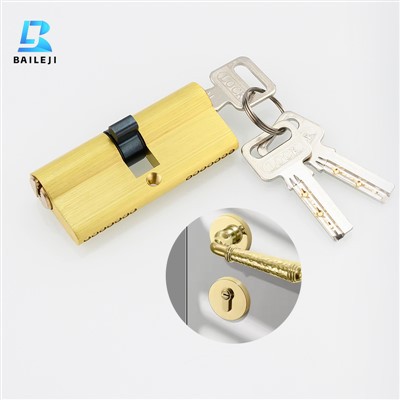
First, let’s ground this in what a standard tubular lock is, to set the stage. Traditional tubular pin tumbler locks have a circular body with a keyway shaped like a tube, holding 5 to 7 pin stacks inside. Each pin stack has a top pin, a bottom pin, and a spring; a matching key with cuts along its blade aligns all bottom pins to the shear line, letting the core rotate. For years, the only way to change access to a standard tubular lock was to rekey the pins or swap the entire core. That worked for small use cases, but what if you have 10 storage lockers for employees, or a community pool with 20 gate locks, or a vending route across 15 locations? Rewkeying every time a staff member quits or a vendor changes means ordering new pins, drilling into cores, and wasting time—all costs that add up fast. That’s where combination tubular locks changed the game.
The first generation of combination tubular locks hit the market in the early 2000s, but they were clunky: small, numbered dials on the front of the lock, requiring you to line up numbers, turn, and hope you got the sequence right. They were less reliable than key-operated models, and many users complained about scratched dials or stuck mechanisms. Today, modern combination tubular locks solve those early flaws, offering two distinct types of combination options: dial-based combination locks for physical access and electronic combination locks (often called “smart tubular locks”) for digital access. Both are fully functional alternatives to traditional keyed tubular locks, and both come with features that make them ideal for specific use cases.
Dial-based combination tubular locks are the most intuitive for low-tech applications. Most of our current models use a 4-digit combination, which strikes a balance between security and ease of use—too few digits and you risk unauthorized access, too many and users forget the sequence. What makes these locks stand out for commercial clients is their reconfigurability. Unlike a standard keyed tubular lock, where changing access means ordering a new key, dial-based combination models let you reset the combination on-site, no special tools required. For example, a property manager managing 12 student storage lockers can set a unique combination for each locker at the start of the semester, then reset every combination for the next term—no need to stock a dozen spare keys, no risk of lost keys leaving someone locked out, no extra labor for rekeying. I’ve worked with a small apartment complex in downtown Austin that switched all its pool gate and mailbox tubular locks from keyed to combination in 2022; their maintenance team estimated they saved over $1,800 that year alone on rekeying and lost key replacements. That’s not a trivial number for a small business.
But dial-based combination locks aren’t the only option. For users who want the convenience of digital access without the bulk of a separate smart lock, electronic combination tubular locks (also called keyless tubular locks) are a game-changer. These models replace the standard keyway with a small keypad, or sometimes a fingerprint scanner, and use a numeric combination to grant access. What sets these apart from dial-based models is that many have programmable features: you can set time-limited combinations for a cleaning crew that only needs access between 2 and 5 PM, or one-time combinations for a contractor visiting for a single day, or even sync them to a phone app so you can send access codes remotely. For example, a vending route owner I supply works with 22 machines across 11 cities; before switching to electronic combination tubular locks, he was dealing with lost keys, duplicated keys, and the hassle of waiting for a spare key to be shipped if a key went missing. Now, he can send a unique temporary code to each of his drivers for the day, and revoke access immediately if a driver quits—all without touching the lock itself. That kind of flexibility just isn’t possible with a standard keyed tubular lock.
Now, you might be wondering: how do combination tubular locks compare in security to traditional keyed models? That’s a valid concern, especially for people who rely on tubular locks for moderate security applications. Let’s break this down. A high-quality combination tubular lock (whether dial or electronic) will meet the same ANSI security standards as a standard keyed tubular lock, which is the industry benchmark for lock performance. For example, our combination models have 7-pin cores, anti-pick pins, and hardened steel shackles (for padlock-style tubular applications) to resist prying and manipulation. The combination itself adds an extra layer of security: a 4-digit combination has 10,000 possible combinations, which is far more than the key cuts on a standard 5-pin tubular lock (which has 1,024 possible unique cuts, though most are not allowed for security). That means it’s much harder to guess a combination than it is to duplicate or pick a standard keyed tubular lock, in most cases. The only caveat is that lower-quality combination locks might have weak mechanisms, which is why working with a reputable supplier matters. I’ve seen cheap combination locks from overseas that jam after six months of use, so we only carry models that have 10,000+ operating cycles, meaning they’re built for heavy use in commercial settings.
Another common question: can combination options be added to existing tubular locks, or do you have to replace the entire lock? That’s a big one for customers who don’t want to rip out existing hardware, especially in older buildings or established locations. The short answer is: sometimes, but it depends on the lock’s size and core type. Many standard tubular locks use a 7/8-inch or 1-inch core, and there are aftermarket combination cores that can be swapped out for your existing keyed core, no drilling required. For example, if you have a set of old mailbox tubular locks that are all keyed the same, you can replace just the core with a combination core, and keep the existing lock body, so you don’t have to patch holes or reconfigure the door. We supply these aftermarket cores for customers who want a low-cost upgrade without full lock replacement; they typically cost a third of the price of a new combination lock, and take 10 minutes to swap, with a simple reset process. That’s a huge benefit for small businesses or property managers working on a budget.
Of course, combination tubular locks aren’t right for every use case. If you have a high-security location like a bank vault or a commercial server room, a keyed tubular lock might be paired with a combination deadbolt for extra layers, but a standalone combination tubular lock is probably not going to meet your needs. For low-traffic, high-security applications, traditional keyed tubular locks with restricted key blanks (meaning only authorized locksmiths can make copies) are still the best choice. But for medium-traffic commercial use—storage lockers, vending machines, apartment mailrooms, gate locks, and retail storage closets—combination options are a clear upgrade in convenience, cost, and security.
Let’s talk about a few real-world examples to make this concrete. Last year, I worked with a college’s student housing department. They had 180 storage lockers in the basement of a dorm, all with keyed tubular locks. Every semester, they dealt with lost keys, which cost them an average of $1,200 per semester to rekey and replace lock cores. They switched to combination tubular locks with 4-digit resetable combinations, and over the course of the next year, they reduced those costs by 92%. They also eliminated the problem of students who forgot their keys and had to be let in by maintenance; instead, students could reset their own combination if they forgot, or ask a roommate for the code. That kind of win is what makes combination tubular locks so valuable for educational and residential properties.
Another example: a small café chain with 5 locations. They had tubular locks on their back storage doors, which all used the same key for all managers. When a manager left the company, they had to rekey all 5 locks, which took a locksmith 3 hours per location, at $80 an hour—so $1,200 every time a manager turned over. They installed electronic combination tubular locks that let each manager have a unique code, so when a manager left, they just disabled their code, no rekeying needed. That saved them $6,000 in the first year alone, and cut down on the time their maintenance team spent on lock-related issues.
Now, if you’re considering making the switch to combination tubular locks, there are a few factors to keep in mind. First, consider your use case: dial-based combination locks are best for low-tech, outdoor applications like pool gates or storage sheds, where you don’t want to deal with batteries. Electronic combination locks are better for indoor, high-traffic applications, where remote access or time-limited codes are useful. Second, check the lock’s operating cycle: if you’re going to use it multiple times a day, make sure it’s rated for 10,000+ cycles, which is standard for commercial-grade models. Third, if you’re upgrading existing locks, confirm the core size of your current tubular locks—most standard doors use 7/8-inch cores, which is the most common size for combination cores.
At the end of the day, the biggest advantage of combination tubular locks is their flexibility. They solve a problem that’s plagued tubular locks for decades: the inflexibility of fixed key sets. As a supplier, I don’t just sell locks—I work with customers to find the right solution for their specific needs, whether that’s a simple dial combination for a small storage closet or an electronic combination lock for a network of vending machines. I’ve seen customers go from frustrated with lost keys and high rekeying costs to saving thousands of dollars and eliminating security gaps, all because of a combination tubular lock.

If you’re tired of dealing with the limitations of standard keyed tubular locks, or you’re looking to upgrade your current lock set with a more flexible, cost-effective security option, reach out to our team for a consultation. We can help you assess your space, choose the right combination tubular lock for your needs, and provide guidance on installation and resetting the combination. No matter what your use case is, we’ll work with you to find a solution that fits your budget and security requirements.
Padlock References
- ANSI/BHMA A156.32-2016, Standard for Locks and Latches for General Use, Builders Hardware Manufacturers Association
- Tubular Lock Technology Report, 2023, Locksmith Journal, Inc.
- Commercial Access Control Cost Analysis, 2022, National Association of Property Managers
Suzhou Baileji Intelligent Lock Industry Co., Ltd.
As one of the most professional tubular lock manufacturers and suppliers in China, we’re featured by quality products and good price. Please rest assured to buy discount tubular lock in stock here and get pricelist from our factory. Also, customized service is available.
Address: 3rd Floor, Building 9, Shengteng Industrial Park, No.8 Ruyuan Road suzhou, jiangsu, China
E-mail: vip@bailejilocks.com
WebSite: https://www.bailejilock.com/
