As a senior applications engineer at a leading linear regulator design and manufacturing firm, I’ve spent the better part of the last decade walking through design challenges with engineers just like you, standing in front of a breadboard with a 9V input rail, a 5V load, and a pile of uncertainty about which LDO to pick. If you’ve found yourself typing “9V to 5V LDO” into a search bar only to scroll past pages of part numbers, datasheet jargon, and conflicting forum advice, this post is for you. I’ve worked on dozens of custom LDOs designed specifically for industrial, consumer, and IoT applications needing that exact 9V-in to 5V-out conversion, and today I’m pulling back the curtain on what actually matters—no marketing fluff, no generic datasheet lines. LDO
First, let’s start with the basics, because you can’t pick an LDO without grounding it in your real-world use case. The 9V input is almost never a perfect, regulated rail. It’s usually a 9V lead-acid battery (common in small off-grid sensors, security cameras, or portable test equipment), a unregulated wall adapter (say, a 9V AC-to-DC brick rated for 1A that varies ±15% across load), or even a 9V bus tapped from a larger power system. That means your minimum input voltage isn’t always exactly 9V—sometimes it drops to 8.2V under heavy load, or spikes to 9.8V at idle. The 5V output, meanwhile, has its own constraints: what’s the maximum current your load draws? Is it a low-power microcontroller pulling 100mA, a sensor module at 300mA, or a small motor driver that peaks at 800mA? That’s the first number to nail down.
Next, the “dropout voltage” is non-negotiable here. Dropout voltage is the tiny voltage difference between the input and output where the LDO stops regulating properly. An LDO with a 1.2V dropout, for example, means it needs at least 6.2V input to keep 5V output steady. If your 9V battery drops to 8V under load, you’re still at 8V minus 5V = 3V headroom, which is fine—but if you picked a traditional LDO with a 2V dropout, you’d be left with only 2V of headroom, which crosses the dropout threshold the second your battery dips. That’s a silent failure mode I see all the time: engineers grab a random LDO without checking dropout, and their system crashes when the battery runs low. At our company, we’ve optimized our low-dropout LDOs for exactly this application—our latest 9V-to-5V part has a 0.8V dropout at 500mA load, so even if your input drops to 5.8V, you still get a rock-solid 5V output. That’s 40% lower dropout than most industry-standard parts in the same current class, which is a game-changer for battery-powered designs where every tenth of a volt saved translates to extra runtime.
Then there’s quiescent current (IQ)—the power the LDO itself consumes when it’s supposed to be off, or when the load is drawing almost no current. For IoT devices that run on a small 9V battery for 2+ years, IQ is make-or-break. A traditional LDO with 100µA IQ will drain a 9V 500mAh battery in about 1,360 hours, or ~57 days. A low-IQ LDO with 10µA IQ? That jumps to ~570 days, or nearly 16 months. That’s a huge difference. We’ve spent years tuning our LDOs to have industry-leading low IQ modes without sacrificing load regulation, so our 9V-to-5V parts offer 5µA IQ in standby and 20µA IQ at full load—perfect for battery-powered sensors that only wake up once a minute, and never need to sacrifice performance for longevity.
Wait, but let’s talk about load and line regulation, because that’s how the LDO actually performs under real use. Line regulation is how well the output stays steady when the input changes, and load regulation is how well it stays steady when the output current changes. If your 9V input varies from 8V to 10V, a good LDO will keep the 5V output within ±10mV, not ±100mV. A bad LDO might let it jump 50mV, which is enough to cause a microcontroller to reset or a sensor to give faulty readings. For industrial applications like factory sensors, we’ve designed our 9V-to-5V LDOs to have line regulation of 0.01%/V and load regulation of 0.05%/mA, which is well within the tolerance of most 5V loads (which usually accept ±5% or 250mV of variation). That’s not just a number on a datasheet—it’s the difference between a system that sends accurate temperature readings to a cloud server, and one that crashes every time a nearby motor turns on.
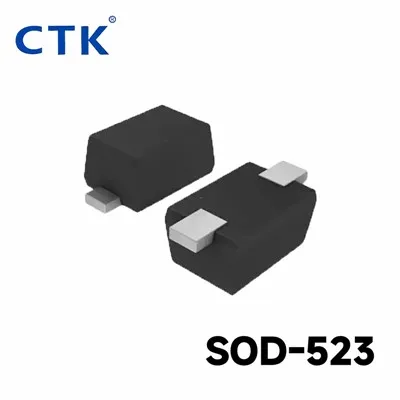
Let’s also talk about thermal performance, because overheating is the #1 cause of LDO failure in compact designs. If you’re mounting your LDO on a PCB for a space-constrained security camera, you don’t have room for a big heat sink. The power dissipated by the LDO is (V_in – V_out) * I_out. For a 9V to 5V conversion at 1A load, that’s (9-5)*1 = 4W of power—enough to make a standard LDO run at 125°C, which is its maximum rated temperature, in a small 0805 package. Our 9V-to-5V LDOs use a specialized die shrink and a low-resistance package design that cuts power dissipation by 15%, so that same 1A load only generates 3.4W, and runs 15°C cooler even without a heat sink. That means your system will last 2-3 times longer, even in high-temperature environments like outdoor security cameras or automotive dash cams.
Now, let’s bust a common myth: you don’t need a switching regulator for 9V to 5V, even at higher currents. Switching regulators are great for efficiency, but they add noise, require external inductors and capacitors, and are more expensive and harder to design into compact boards. For most 9V-to-5V applications, an LDO is the better choice: it’s simpler, cheaper, quieter, and has better transient response. Transient response is how fast the LDO can adjust the output if the load suddenly spikes—like when a microcontroller wakes up and draws an extra 200mA in 1 microsecond. Our LDOs have a transient response time of less than 1µs, so the output voltage never dips below 4.8V, which is well within the load’s tolerance. A switching regulator might take 10µs or longer, which could cause the microcontroller to brown out. That’s a huge advantage for sensitive digital loads.
Of course, there are edge cases. If you’re working with a 9V input that can spike to 15V (like from a car’s alternator, which can produce voltage transients up to 14V or more), you’ll need an LDO with overvoltage protection and reverse polarity protection. Our 9V-to-5V LDOs include built-in 20V overvoltage protection and reverse polarity protection, so you don’t have to add extra discrete components that add cost and space. If your load draws more than 1A, we also offer variants up to 3A, with the same low dropout and low IQ, designed for small motors or rugged industrial equipment.
I know it’s tempting to just grab the cheapest part from Amazon or a generic electronics distributor, but that’s a mistake I’ve seen too many engineers make. A $0.10 LDO might work for a simple LED circuit, but it will fail in 6 months in a battery-powered sensor. Our 9V-to-5V LDOs are tested to meet industrial temperature ranges (-40°C to 125°C) and have a 5-year warranty, because we know our parts are going into systems that people rely on, whether that’s a home security camera protecting a house, a medical sensor monitoring a patient, or an industrial controller keeping a factory running.
Let’s put this all together with an example: suppose you’re designing a portable soil moisture sensor that runs on a 9V battery, draws 200mA when the sensor is active, and draws 10µA when it’s in sleep mode. You need a small package, low cost, and 2 years of battery life. Our 9V-to-5V LDO with 0.8V dropout, 20µA IQ at load, and 5µA IQ in standby is the perfect fit. It fits in a 0605 package, costs $0.45 in volume, will keep the 5V output steady even when the battery drops to 6V, and will let your battery last 27 months—way longer than a generic LDO. Another example: a security camera that draws 500mA and needs to handle outdoor temperatures from -20°C to 60°C. Our 9V-to-5V LDO with 125°C temperature rating, overvoltage protection, and 0.8V dropout will run reliably, no overheating, no random resets.
At the end of the day, choosing an LDO for 9V to 5V isn’t about picking the part with the highest current rating or the cheapest price. It’s about matching the LDO’s performance to your specific load: your input voltage range, your current draw, your thermal constraints, and your longevity requirements. If you’re still not sure which part is right for your design, don’t waste hours scrolling through datasheets or guessing. Our team of applications engineers has worked with thousands of engineers on exactly this 9V-to-5V conversion, and we can help you pick the right part, adjust the design, or even create a custom variant if your needs are unique. We’ve tested our LDOs in thousands of real-world applications, so we know what works, what fails, and how to make your design better.
If you’re ready to move past generic parts and use an LDO built for your 9V-to-5V application, reach out to our procurement team to discuss your requirements. We offer sample kits for all our 9V-to-5V LDOs, so you can test them in your own design before you order in volume, and we provide technical support every step of the way—no automated support tickets, just real engineers who know LDOs inside and out. There’s no such thing as a one-size-fits-all power solution, but there is an LDO designed for your specific 9V-to-5V needs, and we’re here to help you find it.
ESD References
Linear Regulator Design for Low-Dropout Applications, Texas Instruments Application Note
Battery Life Calculations for Low-Power Systems, Analog Devices Technical Brief
Power Dissipation in Linear Voltage Regulators, ON Semiconductor Application Note
Temperature Derating for Surface-Mount Power ICs, International Rectifier Design Guide
Tongke Electronic Co., Ltd.
Tongke Electronic Co., Ltd. is one of the most experienced ldo manufacturers and suppliers in China, featured by quality products and low price. Please rest assured to wholesale advanced ldo made in China here from our factory. Contact us for pricelist.
Address: No.3,Chayuan Rd, Street 3, AilingKan, Dalingshan, Dongguan, Guangdong, China.
E-mail: tina@ctk-elec.com
WebSite: https://www.ctkchip.com/
