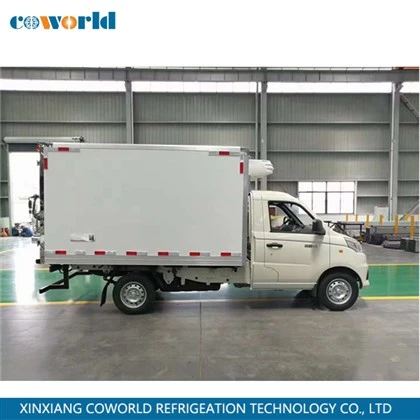
If you’ve ever walked near a commercial building at 2 a.m. and heard that low, rumbling hum that’s impossible to ignore, chances are you were close to a rooftop refrigeration unit. As a supplier of these units, I get asked all the time: “How noisy is it, really? Should I worry about noise complaints from tenants or neighbors?” It’s not a yes or no answer—there’s a lot of science behind the sound, and it matters way more than just “is it loud enough to annoy people at 3 a.m.” Let’s break it down, no stuffy engineering jargon required. Rootop Refrigeration Unit
First, let’s talk units because that’s where the confusion starts. When we say “how noisy,” we’re talking about decibels (dB), right? But not all dB are the same. The decibel scale is logarithmic, which means a 10 dB increase doesn’t just sound twice as loud—it’s actually perceived as about twice as loud. That’s why a whisper (30 dB) is quiet, a normal conversation (60 dB) is 10 times louder, and a lawn mower (90 dB) is 100 times louder than a whisper. So right off the bat, context is everything.
Most rooftop refrigeration units (let’s call them RTUs for short, since that’s what we use at our supplier) run between 55 dB and 85 dB at 10 feet away from the unit. Wait, that’s a huge range—55 dB is like quiet background chatter in a library, 85 dB is about as loud as a lawn mower right next to you. Why the difference? It all comes down to the unit’s size, type, and how well it’s built. A small RTU for a corner bodega (the kind that keeps cold drinks and deli meat) will land around 55 to 60 dB, which is totally unnoticeable if you’re inside a store, and barely a faint hum from the street. But a big RTU for a grocery store or warehouse—something that’s cranking out 10+ tons of cooling—can hit 80 to 85 dB. That’s when it becomes a problem for nearby residents or office workers who might be on a patio right next to the roof.
But here’s the thing: the number at 10 feet is just a baseline. Sound dissipates fast as it moves away. At 50 feet out, that 85 dB RTU drops to about 70 dB—still noticeable, but not the ear-splitting noise you’d hear standing right under it. At 100 feet, it’s around 65 dB, which is about the same as a regular conversation you’d have across a table. That’s why a lot of people don’t even realize their office building’s RTU is making noise until someone complains from a neighbor’s apartment that’s 50 feet away. The space between the unit and the closest structure changes everything. We had a customer a few months back who installed a new 10-ton RTU right next to a residential alley, and they were panicking because the initial test at 10 feet was 82 dB. But once we mapped the sound, at the nearest apartment window (about 45 feet away), it was 71 dB—way below the threshold that most cities set for nighttime noise (which is usually around 60 dB for residential areas after 10 p.m.).
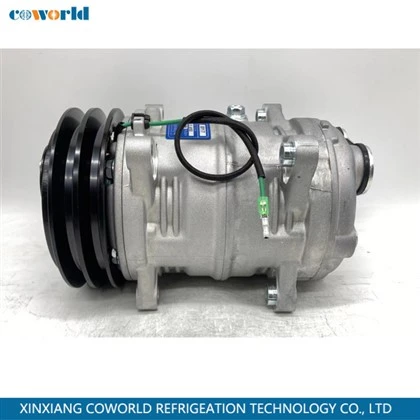
Now, what makes an RTU loud? Let’s get into the nitty-gritty without boring you. Most of the noise comes from two main parts: the compressor and the fan. The compressor is the heart of the unit—it’s what circulates the refrigerant to cool air, and it runs nonstop (or in cycles, depending on the temperature). Older compressors used to rattle and vibrate a lot, but modern units (the ones we supply) have rubber mounting pads that absorb that vibration, cutting compressor noise by 5 to 10 dB right there. The fan is the other big culprit: it’s a big, blade-shaped thing that blows air over the condenser coils, and if it’s unbalanced or has loose parts, it can make a high-pitched whine that’s way more annoying than a low hum.
Wait, there’s also “structure-borne noise” that people don’t talk about enough. If you mount an RTU directly on the roof without any vibration pads or a sound insulating base, all that rattling and humming travels through the roof itself. Suddenly, instead of the noise staying on the roof, it’s booming through the ceiling of the office below. That’s a common mistake we see new customers make—they want to save a few bucks on installation, so they skip the insulation, and then their employees are complaining about the noise in the conference room. We always emphasize adding those pads; they don’t cost much, but they can cut structure-borne noise by up to 15 dB.
Now, let’s talk about when noise becomes a problem. Cities have noise ordinances for a reason, and most of them set limits for commercial equipment. For daytime (7 a.m. to 10 p.m.), residential areas usually cap noise at 55 to 65 dB, and nighttime drops to 50 to 55 dB. If your RTU is hitting 70 dB or more at the nearest property line after 10 p.m., you’re probably going to get a complaint. But here’s the good news: a lot of older RTUs that are loud can be retrofitted instead of replaced. We’ve done dozens of retrofits for customers with 15+ year-old units—adding fan shrouds, new compressor mounts, or even acoustic panels around the unit can cut noise by 10 to 15 dB without swapping the whole thing out. That’s a big cost saver, and it’s usually enough to meet local noise rules.
I should also mention that climate plays a role. If you’re in a hot place like Phoenix or Miami, your RTU is going to run longer and harder than one in a cooler city like Chicago or Seattle. That extra runtime means more noise, especially if the unit is already approaching its maximum capacity. We had a customer in Dallas last year who thought their new RTU was defective because it was running so loud all summer—turns out their store was way bigger than the unit was rated for, so it was working 24/7 to keep up. We swapped them for a slightly larger unit with a variable-speed compressor, which runs quieter when it doesn’t need to work as hard, and their noise level dropped by 8 dB instantly.
Now, let’s address a myth: all rooftop units are loud. No, not at all. The units we supply for small businesses—like coffee shops, boutique stores, or small offices—are engineered with sound reduction as a top priority. They use quieter compressors, variable-speed fans, and come with acoustic insulation built right in. A small 3-ton unit for a 1,000 square foot shop will usually clock in at 58 to 62 dB at 10 feet, which is about as loud as a fridge running in your kitchen. You barely notice it. The loudest units are the big, heavy-duty ones for grocery stores, hospitals, and warehouses, but even those can be quieted down with the right design.
So, what should you do if you’re worried about noise? First, figure out where the RTU is going to sit relative to the closest residences or noise-sensitive areas. If it’s going to be right next to a backyard or a patio, you might want a smaller unit, or add a sound barrier like a fence around it. Second, check your local noise ordinance—most cities have easy online tools to look up the limits for commercial equipment. Third, if you’re buying a new unit, ask for its sound rating (it should be listed as dB at 10 feet) and make sure it meets those limits. If you have an old unit, a retrofit is almost always cheaper than a replacement and will fix most noise issues.
At the end of the day, noise doesn’t have to be a dealbreaker for commercial cooling. As a rooftop refrigeration unit supplier, we don’t just sell units that keep your space cold—we design them to be as quiet as possible, too. We work with customers to figure out the right size, the right insulation, and the right installation to make sure their unit doesn’t become a headache for them or their neighbors. Whether you’re a small business owner looking for a new unit, or a property manager dealing with a noisy old one, we can help you find a solution that balances cooling efficiency and noise level.
If you’re tired of guessing whether your rooftop refrigeration unit is too loud, or you’re ready to replace an old, noisy unit with something quiet and reliable, reach out to our team to chat through your needs. We’ll send a technician out to test your current unit’s noise level, help you pick the right size and type for your space, and walk you through every step to make sure you stay compliant with local noise rules. No salesy jargon, no hidden fees—just straight talk about cooling and noise, because that’s what we do best.
Electric Refrigeration Unit References
- ASHRAE Handbook: HVAC Applications, Chapter 56 – Noise and Vibration Control, 2021
- U.S. Environmental Protection Agency (EPA) Guide to Noise Control for Commercial and Residential Buildings, 2019
- Air-Conditioning, Heating, and Refrigeration Institute (AHRI) Standard 270 – Sound Rating of Room Air Conditioners and Heat Pumps, 2020
- World Health Organization (WHO) Guidelines for Community Noise, 1999
Xinxiang Coworld Refrigeration Technology Co., Ltd.
As one of the most professional rootop refrigeration unit manufacturers and suppliers in China, our products have good reputation in the market. We warmly welcome you to buy cheap rootop refrigeration unit for sale here from our factory. If you have any enquiry about cooperation, please feel free to email us.
Address: B103 ROOM, GT CITY, NO.199 ZHENGZHONG ROAD, HIGH TECH ZONE, XINXIANG CITY, HENAN PROVINCE, CHINA
E-mail: coworldfrio@hotmail.com
WebSite: https://www.coworldthermo.com/
