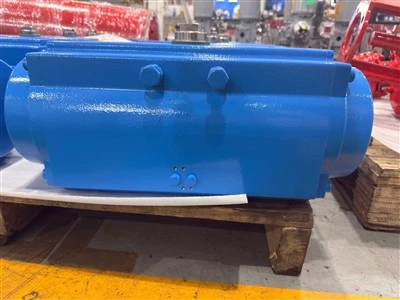
Hey there! I’m a supplier of pneumatic actuators, and I know firsthand how challenging it can be to keep these nifty devices running smoothly in a dusty environment. Dust can be a real pain in the neck for pneumatic actuators, causing all sorts of problems that can lead to costly downtime and repairs. But don’t worry, I’m here to share some tips and tricks on how to protect your pneumatic actuators from the harmful effects of dust. Pneumatic Actuator

First off, let’s talk about why dust is such a big deal for pneumatic actuators. Dust particles can get into the actuator’s internal components, such as the pistons, cylinders, and valves. Once inside, these particles can act like sandpaper, wearing down the surfaces and causing friction. This can lead to increased wear and tear on the actuator, reducing its lifespan and performance. Dust can also clog the air passages in the actuator, restricting the flow of air and causing it to operate inefficiently. In some cases, dust can even cause the actuator to malfunction or fail completely.
So, how can you protect your pneumatic actuators from dust? Well, the first step is to choose the right actuator for the job. When selecting a pneumatic actuator for a dusty environment, look for models that are specifically designed to be dust-resistant. These actuators often have sealed enclosures, protective coatings, or filters to prevent dust from entering the internal components. They may also have features such as self-lubricating materials or low-friction surfaces to reduce the effects of dust on the actuator’s performance.
Another important step in protecting your pneumatic actuators from dust is to keep them clean. Regularly cleaning the actuator’s exterior can help prevent dust from building up and entering the internal components. Use a soft brush or cloth to remove any loose dust or debris from the actuator’s surface. You can also use a compressed air gun to blow out any dust that may have accumulated in hard-to-reach areas. Just be careful not to use too much pressure, as this can damage the actuator’s components.
In addition to cleaning the actuator’s exterior, it’s also important to clean the air supply to the actuator. Dust and other contaminants can enter the air supply system, which can then be carried into the actuator. To prevent this from happening, use an air filter to remove any dust or debris from the air before it enters the actuator. Make sure to choose a filter that is rated for the specific type of dust and contaminants in your environment. You should also regularly replace the filter to ensure that it is working effectively.
Another way to protect your pneumatic actuators from dust is to use a dust cover or enclosure. A dust cover can help prevent dust from settling on the actuator’s surface and entering the internal components. You can purchase a pre-made dust cover that is designed to fit your specific actuator model, or you can make your own using a suitable material such as plastic or fabric. An enclosure is a more permanent solution that can provide even greater protection from dust. You can build an enclosure around the actuator using a sturdy material such as metal or plastic. Make sure to leave enough space for the actuator to move freely and to provide access for maintenance and repair.
In addition to these preventive measures, it’s also important to regularly inspect and maintain your pneumatic actuators. Regular inspections can help you detect any signs of wear or damage early on, before they become serious problems. During an inspection, check the actuator’s exterior for any signs of dust or debris buildup, as well as any signs of damage such as cracks or leaks. You should also check the actuator’s internal components, such as the pistons, cylinders, and valves, for any signs of wear or damage. If you notice any problems, make sure to address them immediately to prevent further damage to the actuator.
Regular maintenance is also essential for keeping your pneumatic actuators in good working condition. This includes tasks such as lubricating the actuator’s moving parts, checking the air pressure and flow, and replacing any worn or damaged components. Make sure to follow the manufacturer’s recommended maintenance schedule and procedures to ensure that the actuator is properly maintained.
Finally, if you’re still having problems with dust affecting your pneumatic actuators, don’t hesitate to seek professional help. As a pneumatic actuator supplier, I have a team of experts who can help you troubleshoot any problems you may be having and recommend the best solutions for protecting your actuators from dust. We can also provide you with high-quality pneumatic actuators that are designed to be dust-resistant and reliable.
In conclusion, protecting your pneumatic actuators from dust is essential for ensuring their long-term performance and reliability. By choosing the right actuator for the job, keeping it clean, using a dust cover or enclosure, regularly inspecting and maintaining it, and seeking professional help when needed, you can minimize the damage caused by dust and keep your actuators running smoothly for years to come.
If you’re interested in learning more about our pneumatic actuators or need help protecting your existing actuators from dust, please don’t hesitate to contact us. We’d be happy to discuss your needs and provide you with a customized solution that meets your requirements.
Hydraulic Actuator References
- ASCO – "Pneumatic Actuator Basics"
- Parker Hannifin – "Dust and Contamination Control in Pneumatic Systems"
- SMC Corporation – "Pneumatic Actuator Maintenance Guide"
Zhejiang Bigtork Valve Automation Co., Ltd.
Zhejiang Bigtork Valve Automation Co., Ltd. is one of the leading pneumatic actuator manufacturers and suppliers in China. We warmly welcome you to buy customized pneumatic actuator at competitive price from our factory. Contact us for more details.
Address: 98 Yuanqu Avenue,Anfeng Industrial Zone,Oubei,Yongjia,Zhejiang,China.
E-mail: sales@bigtork.com
WebSite: https://www.bigtork.com/
