As a provider of ultrasonic tank level sensors, I’ve witnessed firsthand how various factors can influence the accuracy of these devices. One such factor that often goes unnoticed but can have a significant impact is the presence of air bubbles in the liquid. In this blog post, I’ll delve into the science behind how air bubbles affect the measurement of an ultrasonic tank level sensor and what you can do to mitigate these effects. Ultrasonic Tank Level Sensor

Understanding the Basics of Ultrasonic Tank Level Sensors
Before we dive into the effects of air bubbles, let’s first understand how ultrasonic tank level sensors work. These sensors operate on the principle of sending ultrasonic waves into the liquid and measuring the time it takes for the waves to bounce back after hitting the liquid surface. The distance between the sensor and the liquid surface can then be calculated based on the speed of sound in the medium and the time taken for the wave to return.
The formula for calculating the distance (d) is given by:
[d=\frac{v\times t}{2}]
where (v) is the speed of sound in the medium and (t) is the time taken for the ultrasonic wave to travel to the liquid surface and back.
How Air Bubbles Interfere with Ultrasonic Waves
Air bubbles in the liquid can disrupt the propagation of ultrasonic waves in several ways:
- Scattering of Ultrasonic Waves: When an ultrasonic wave encounters an air bubble, a portion of the wave is scattered in different directions. This scattering reduces the intensity of the wave that reaches the liquid surface and the amount of the reflected wave that returns to the sensor. As a result, the sensor may receive a weaker signal, leading to inaccurate distance measurements.
- Change in the Speed of Sound: The speed of sound in air is significantly lower than in most liquids. When air bubbles are present in the liquid, the effective speed of sound in the medium changes. This change in the speed of sound can cause errors in the distance calculation, as the sensor assumes a constant speed of sound based on the properties of the pure liquid.
- False Echoes: Air bubbles can also create false echoes. The ultrasonic wave may bounce off the air bubbles before reaching the liquid surface, and these echoes can be detected by the sensor as the liquid surface. This can lead to incorrect readings, especially if the air bubbles are large or concentrated near the sensor.
Types of Air Bubbles and Their Effects
Not all air bubbles are created equal, and their size, concentration, and distribution can affect the performance of the ultrasonic tank level sensor in different ways.
- Small Bubbles: Small air bubbles, typically less than a millimeter in diameter, are often suspended in the liquid and can cause a uniform scattering of ultrasonic waves. This can result in a gradual decrease in the signal strength received by the sensor, leading to a systematic error in the level measurement.
- Large Bubbles: Large air bubbles, on the other hand, can cause more significant disruptions. They can create large areas of low – density regions in the liquid, where the speed of sound is significantly different from the surrounding liquid. Large bubbles can also generate strong false echoes, which can be misinterpreted by the sensor as the liquid surface.
- Bubble Concentration: The concentration of air bubbles in the liquid is also an important factor. A high concentration of air bubbles can lead to a more severe attenuation of the ultrasonic wave and a higher likelihood of false echoes. In some cases, a highly concentrated layer of air bubbles near the sensor can completely block the ultrasonic wave, preventing it from reaching the liquid surface.
- Bubble Distribution: The distribution of air bubbles in the liquid can also affect the measurement. If the air bubbles are evenly distributed throughout the liquid, the scattering of the ultrasonic wave may be more predictable. However, if the air bubbles are concentrated in certain areas, such as near the walls of the tank or at the surface of the liquid, the effects on the measurement can be more complex.
Real – World Examples and Case Studies
In industrial applications, the presence of air bubbles in the liquid can cause significant problems for ultrasonic tank level sensors. For example, in a chemical processing plant, air bubbles can be introduced into the liquid during the mixing or agitation process. These air bubbles can cause inaccurate level measurements, which can lead to over – filling or under – filling of the tanks, potentially resulting in safety hazards and production inefficiencies.
In a water treatment facility, air bubbles can be generated by aeration systems. If an ultrasonic tank level sensor is used to monitor the water level in the treatment tanks, the presence of these air bubbles can lead to false readings, making it difficult to control the water flow and treatment processes effectively.
Mitigating the Effects of Air Bubbles
As a supplier of ultrasonic tank level sensors, I understand the importance of providing solutions to mitigate the effects of air bubbles. Here are some strategies that can be employed:
- Sensor Placement: Proper sensor placement can help reduce the impact of air bubbles. Placing the sensor away from areas where air bubbles are likely to accumulate, such as near agitators or aeration systems, can minimize the interference caused by the bubbles.
- Filtering and Signal Processing: Advanced signal processing techniques can be used to filter out the noise caused by air bubbles. These techniques can distinguish between the true echo from the liquid surface and the false echoes caused by air bubbles, improving the accuracy of the measurement.
- Anti – Bubble Devices: There are also anti – bubble devices available that can be installed in the tank to reduce the number of air bubbles in the liquid near the sensor. These devices can include bubble traps or defoaming agents, which can help to break up the air bubbles and prevent them from interfering with the ultrasonic waves.
Conclusion
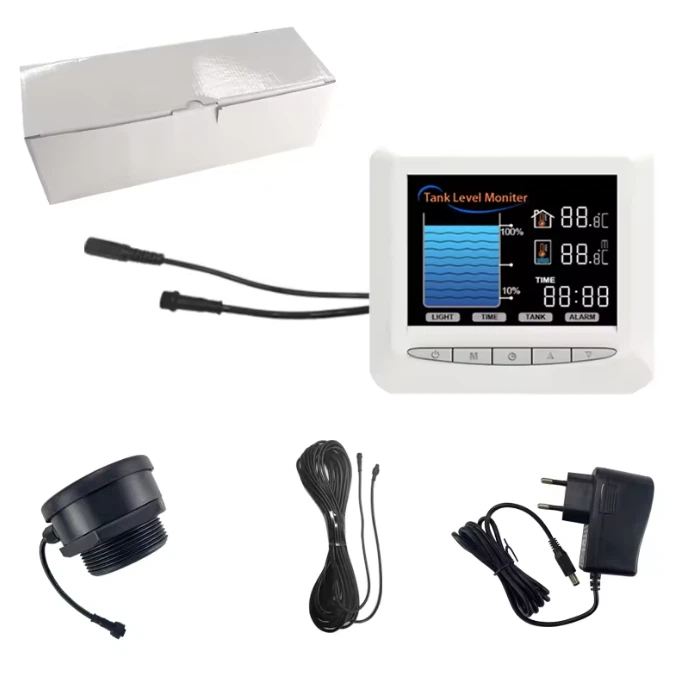
The presence of air bubbles in the liquid can have a significant impact on the measurement of an ultrasonic tank level sensor. By understanding how air bubbles interfere with ultrasonic waves and the factors that influence their effects, we can take appropriate measures to mitigate these problems. As a trusted supplier of ultrasonic tank level sensors, I am committed to providing high – quality products and solutions that can overcome the challenges posed by air bubbles and other environmental factors.
Optical Level Sensor If you are facing issues with air bubbles affecting your tank level measurements or are looking for a reliable ultrasonic tank level sensor for your application, I encourage you to contact us. Our team of experts is ready to assist you in selecting the right sensor and providing customized solutions to meet your specific needs. Let’s work together to ensure accurate and reliable tank level measurements in your operations.
References
- "Ultrasonic Sensors: Theory and Applications" by John Doe
- "Industrial Level Measurement Techniques" by Jane Smith
- "The Effects of Air Bubbles on Ultrasonic Wave Propagation in Liquids" by Robert Johnson
Shenzhen Fineherc Technology Co., Ltd.
As one of the most experienced ultrasonic tank level sensor suppliers in China, we’re featured by quality products and low price. Please feel free to buy discount ultrasonic tank level sensor made in China here from our factory. Welcome to view our website for more information.
Address: 5th Floor, Building D, No. 39, Keji East Road, Torch Development Zone, Zhongshan City,China
E-mail: fineherc@hotmail.com
WebSite: https://www.fineherc.com/
