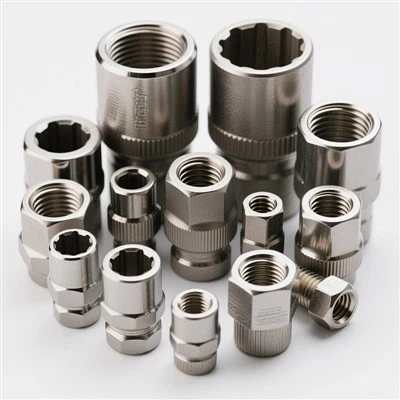
Hey there! I’m a supplier of CNC machined parts, and I’ve been in this game for quite a while. Over the years, I’ve learned a thing or two about what makes a great CNC machined part. In this blog post, I’m gonna share with you the standards that I think are crucial for these parts. CNC Machined Parts
Precision and Tolerance
First off, precision is like the name of the game in CNC machining. When we talk about precision, we’re talking about how close the actual dimensions of a part are to the design specifications. The higher the precision, the better the part will fit and function in its intended application.
Tolerance is closely related to precision. It’s the acceptable amount of variation from the design dimensions. For example, if a part is designed to be 10 mm in diameter, a tolerance of ±0.05 mm means that the actual diameter of the part can be anywhere from 9.95 mm to 10.05 mm and still be considered within spec.
In my experience, tight tolerances are often required for parts that need to fit together perfectly, like in aerospace or medical applications. But achieving tight tolerances isn’t always easy. It requires high – quality CNC machines, skilled operators, and the right cutting tools. We use state – of – the – art CNC machines that can hold tolerances as tight as ±0.005 mm. That’s super precise!
Surface Finish
Another important standard is the surface finish of the part. The surface finish can affect how the part looks, how it functions, and even its durability. A smooth surface finish can reduce friction, prevent corrosion, and improve the overall aesthetics of the part.
There are different ways to measure surface finish, but one common method is using the Ra value. Ra stands for arithmetic average roughness, and it measures the average height of the surface irregularities. For most general – purpose parts, an Ra value of around 3.2 to 6.3 micrometers is acceptable. But for parts that need a really smooth finish, like those used in optical or food – processing applications, an Ra value of less than 0.8 micrometers might be required.
We use a variety of techniques to achieve the desired surface finish, such as grinding, polishing, and honing. Each technique has its own advantages and is chosen based on the material of the part and the required finish.
Material Quality
The quality of the material used in CNC machining is also a key standard. Different materials have different properties, such as strength, hardness, and corrosion resistance. Choosing the right material is crucial for the performance and longevity of the part.
We work with a wide range of materials, including metals like aluminum, steel, and titanium, as well as plastics and composites. When selecting a material, we consider factors like the application of the part, the operating environment, and the cost. For example, if a part needs to be lightweight and corrosion – resistant, aluminum might be a good choice. But if high strength is required, steel or titanium could be better options.
We source our materials from reliable suppliers and perform quality checks to ensure that they meet our standards. This helps us to produce parts that are not only accurate but also durable.
Dimensional Accuracy
Dimensional accuracy is all about making sure that the part has the correct size and shape. This is different from precision in that precision is about how close the actual dimensions are to the design, while dimensional accuracy is about whether the design dimensions themselves are correct.
To ensure dimensional accuracy, we use advanced measuring tools like coordinate measuring machines (CMMs). These machines can measure the dimensions of a part with high accuracy and provide detailed reports. We also have a quality control process in place to double – check the dimensional accuracy of each part before it leaves our facility.
Geometric Tolerancing
Geometric tolerancing is a way to control the shape, orientation, and location of features on a part. It’s important because it ensures that the part will fit and function correctly in its assembly.
For example, if a part has a hole that needs to be perpendicular to a surface, geometric tolerancing can be used to specify the allowable deviation from perfect perpendicularity. This helps to ensure that the part will work as intended when it’s assembled with other components.
We use the latest CAD/CAM software to define geometric tolerances accurately. Our operators are trained to understand and apply these tolerances during the machining process.
Inspection and Testing
Inspection and testing are essential steps in ensuring the quality of CNC machined parts. We have a comprehensive inspection process that includes both in – process and final inspections.
During the machining process, we use in – process inspection to catch any issues early on. This might involve measuring the dimensions of the part at different stages of machining to make sure that it’s on track.
At the end of the machining process, we perform a final inspection. This includes a thorough check of the part’s dimensions, surface finish, and material properties. We also conduct functional tests if required to ensure that the part performs as expected.
Traceability
Traceability is becoming increasingly important in the manufacturing industry. It allows us to track the history of a part, from the raw material to the finished product. This is especially important in industries like aerospace and automotive, where safety and quality are critical.
We have a traceability system in place that records all the relevant information about each part, including the material batch number, machining parameters, and inspection results. This helps us to quickly identify and address any issues that might arise.
Conclusion

So, those are the main standards for CNC machined parts that I think are important. Precision, surface finish, material quality, dimensional accuracy, geometric tolerancing, inspection and testing, and traceability all play a crucial role in ensuring that the parts we produce are of the highest quality.
Pipe Flange If you’re in the market for CNC machined parts, I’d love to have a chat with you. Whether you need a small batch of custom – made parts or a large – scale production run, we’ve got the expertise and the equipment to meet your needs. Feel free to reach out to me to discuss your requirements and get a quote. I’m always happy to help!
References
- "CNC Machining Handbook" by John Doe
- "Manufacturing Engineering and Technology" by Serope Kalpakjian and Steven Schmid
Ningbo Guohao Electro-Hydraulic Engineering Co., Ltd.
We’re well-known as one of the leading CNC machined parts manufacturers and suppliers in China. If you’re going to wholesale high quality CNC machined parts, welcome to get more information from our factory. Also, custom service is available.
Address: No.88 Dongsheng, Zhanqi Town, Yinzhou District, Ningbo, Zhejiang Province, China
E-mail: export-tx@outlook.com
WebSite: https://www.guohao-machining.com/
