In today’s fast – paced business world, efficient attendance management is crucial for the smooth operation of any organization. As a supplier of Analogue Time Recorders, I’ve witnessed firsthand how these devices can revolutionize the way companies track employee attendance. In this blog, I’ll share my insights on how to effectively use an Analogue Time Recorder for attendance management. Analogue Time Recorde
Understanding the Analogue Time Recorder
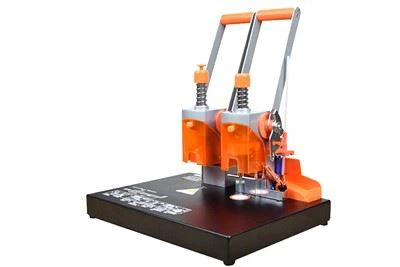
Before delving into its usage, it’s essential to understand what an Analogue Time Recorder is. An Analogue Time Recorder is a mechanical or electromechanical device that records the time an employee punches in and out of work. It typically uses a clock mechanism and a paper card to record the time. The device has a punch mechanism that makes a hole or imprints the time on the card, providing a physical record of an employee’s work hours.
Setting Up the Analogue Time Recorder
The first step in using an Analogue Time Recorder is setting it up correctly. Start by choosing a suitable location for the device. It should be placed in a visible and accessible area, such as near the entrance of the workplace. This ensures that employees can easily punch in and out as they arrive and leave.
Next, set the correct time on the recorder. Most Analogue Time Recorders have a clock adjustment mechanism. Use the appropriate tools, such as a screwdriver or a knob, to set the hours, minutes, and seconds accurately. It’s important to check the time regularly, especially if there are daylight saving time changes or other time – related adjustments.
Load the paper cards into the recorder. These cards are usually pre – printed with columns for the date, time, and employee information. Make sure the cards are loaded correctly, with the appropriate side facing up and the correct orientation. Some recorders may require you to insert the cards manually, while others have an automatic card – feeding mechanism.
Employee Training
Once the Analogue Time Recorder is set up, it’s crucial to train your employees on how to use it. Conduct a training session where you demonstrate the proper way to punch in and out. Explain to employees that they should insert their cards into the recorder and wait for the punch to be made. They should avoid forcing the card or punching multiple times, as this can damage the recorder or result in inaccurate time records.
Provide employees with clear instructions on when they should punch in and out. For example, they should punch in at the start of their shift and punch out at the end. If there are breaks during the shift, inform them whether they need to punch in and out for breaks as well.
Recording Attendance
When an employee punches in, the Analogue Time Recorder will mark the time on the paper card. The time is usually recorded in a specific format, such as hours and minutes. As the employee punches out at the end of the shift, another time stamp is added to the card.
The paper cards serve as a physical record of the employee’s attendance. At the end of each pay period or a specific time interval, these cards can be collected and reviewed. HR or management personnel can use the cards to calculate the total number of hours worked by each employee, determine overtime, and ensure compliance with labor laws.
Managing Attendance Data
One of the challenges of using an Analogue Time Recorder is managing the attendance data. The paper cards need to be organized and stored properly. You can use a filing system to keep the cards in order, either by employee name, department, or pay period.
To analyze the attendance data, you can create a spreadsheet or use attendance management software. Enter the data from the paper cards into the spreadsheet, including the date, time in, time out, and total hours worked. This will allow you to generate reports, such as attendance summaries, overtime reports, and absence records.
Troubleshooting Common Issues
Like any mechanical device, Analogue Time Recorders can experience problems. One common issue is a jammed punch mechanism. If the card gets stuck in the recorder, carefully remove it using a pair of tweezers or a card – removal tool. Make sure not to damage the card or the recorder during the process.
Another issue is inaccurate time records. This can be caused by a misaligned punch mechanism or a problem with the clock. If you notice that the time stamps on the cards are incorrect, check the clock settings and the punch mechanism. You may need to adjust the clock or realign the punch to ensure accurate time recording.
Benefits of Using an Analogue Time Recorder
There are several benefits to using an Analogue Time Recorder for attendance management. Firstly, it provides a simple and reliable way to record employee attendance. The physical paper cards serve as a tangible record that can be easily reviewed and audited.
Secondly, Analogue Time Recorders are relatively inexpensive compared to digital attendance systems. They do not require complex software installations or regular software updates, making them a cost – effective solution for small and medium – sized businesses.
Finally, Analogue Time Recorders are easy to use. Employees do not need to be tech – savvy to operate them, and there is no learning curve associated with using the device.
Conclusion

In conclusion, an Analogue Time Recorder is a valuable tool for attendance management. By following the steps outlined in this blog, you can effectively use an Analogue Time Recorder to track employee attendance, manage attendance data, and ensure the smooth operation of your business.
Analogue Time Recorde If you’re interested in improving your attendance management system and are considering an Analogue Time Recorder, I encourage you to reach out to discuss your specific needs. Our team of experts can provide you with more information about our products and help you find the best solution for your organization.
References
- "Attendance Management Best Practices" – Various industry reports on attendance management techniques.
- "Mechanical Time Recording Devices: A Guide" – Technical literature on the operation and maintenance of Analogue Time Recorders.
Dongguan QIMI Office Equipment Co., Ltd.
Dongguan QIMI Office Equipment Co., Ltd. is one of the most professional analogue time recorde manufacturers and suppliers in China, featured by cheap products and good service. Welcome to wholesale bulk customized analogue time recorde at competitive price from our factory. Contact us for pricelist and quotation.
Address: Room 321, Building 6, Linrun Zhigu Valley,No. 1, Research Road, Songshan Lake Industrial Park, Dongguan City, Guangdong Province, China
E-mail: wendy@qimi-timerecording.com
WebSite: https://www.qimi-timerecording.com/
